Category: Action-Adventure
-

Black Panther moves extraordinarily well. It’s got a number of constraints, which director Coogler and co-screenwriter Joe Robert Cole agilely and creatively surmount. It’s also got Coogler’s lingering eye. The film can never look away from its setting–the Kingdom of Wakanda–for too long. Rachel Morrison’s photography emphasizes it, the editing emphasizes it, Ludwig Göransson’s likably…
-

Why does Thor: Ragnarok open with Chris Hemsworth narrating only for him to stop once the title card sizzles? Literally, sizzles. Ragnarok is delightfully tongue-in-cheek and on-the-nose. Director Waititi refuses to take anything too seriously, which makes for an amusing two plus hours, but it doesn’t amount to much. If anything. When Hemsworth stops narrating–after…
-

Excellent solo outing for Spider-Man Tom Holland (after first appearing in CAPTAIN AMERICA: CIVIL WAR). He’s just a modern high schooler trying to survive debate club and homecoming date woes while playing superhero after school superhero. He wants to do more, of course, much to guest star Robert Downey Jr.’s dismay. Watts’s direction has a…
-

Justice League exists, whether intentionally or not, outside a certain kind of critical examination. Director Snyder didn’t finish post-production. Or, at least, when the studio demanded lots of reshoots, Snyder wasn’t involved in a creative capacity. The job went to Joss Whedon, who gets a co-writer credit. Are the terrible scenes Whedon’s fault or Snyder’s…
-

The Amazing Spider-Man 2 is bereft of good ideas. It’s also bereft of good music–Hans Zimmmer’s bland “superhero” score rattles the brain, bowdlerizing what might be better scenes and effect sequences. It’s impossible to know, because there’s never a single moment of music without ludicrous bombast. Who knows how it’d have played if the superhero…
-
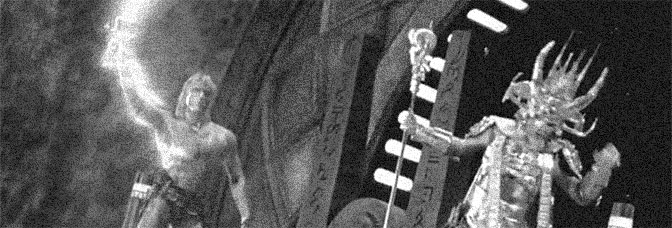
Masters of the Universe is almost charming in its lack of charm. Its plot is a kitchen sink–a little Conan sword fighting here, a little Superman opening credits, a lot of Star Wars stuff (like all black “troopers” with laser guns, the skiffs from Jedi), but also lots of other popular eighties things. There’s some…
-
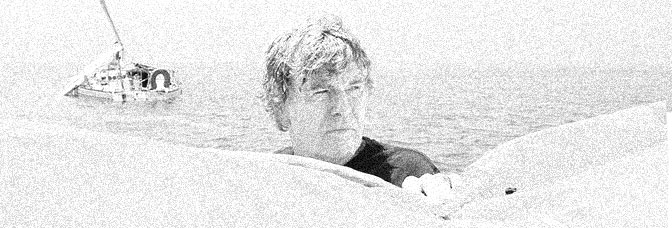
All Is Lost is the harrowing tale of an unnamed man (Robert Redford) on his damaged yacht in the Indian Ocean. The film runs 106 minutes. It’s harrowing for all of them. Director Chandor knows how to harrow. The film has a mundane reality about it. Redford has no back story, no character development, almost…
-
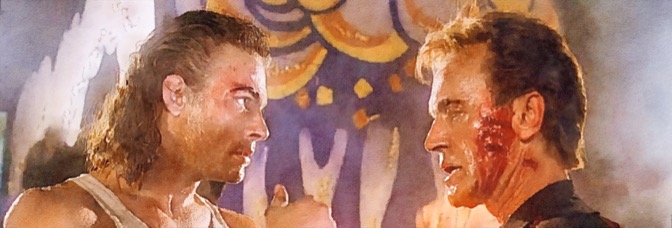
There’s nothing spectacularly wrong with Hard Target. It’s a competently executed early nineties action movie. There’s a lot of good stunt work and some amazing pyrotechnics. Lance Henriksen is great as the villain. Wilford Brimley is in it as a Cajun assault archer. Almost everything about it is absurd, but not really out of the…
-

Kong: Skull Island has a deceptively thoughtful first act. Director Vogt-Roberts and his three screenwriters carefully and deliberately introduce the cast and the seventies time period (the film’s set immediately following the U.S. withdrawal from Vietnam). The script’s smart in the first act, giving John Goodman and sidekick Corey Hawkins a quest. They need to…
-

The Phantom has three distinct visual spaces, more or less corresponding to the three acts. First act is in the remote jungle, second act is modern age–New York City–third act is evil villain pirate stronghold. Underground evil villain pirate stronghold. The last half hour of the movie is the cast running around a “slightly better…
-

The Amazing Spider-Man is melodramatic trifle, but not in any sort of bad way. I mean, it doesn’t succeed but it does try a lot. Director Webb really goes for a high school romance, with such saccharine effectiveness it probably ought to be an ominous foreshadowing for leads Andrew Garfield and Emma Stone’s burgeoning romance.…
-
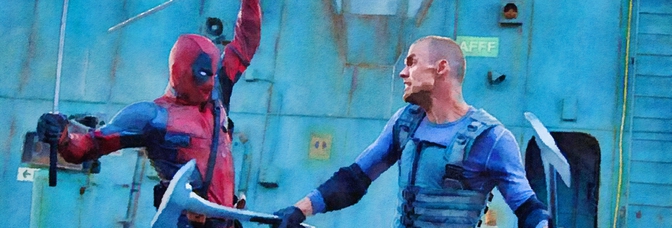
Deadpool never gets to be too much. The film quickly goes into flashback–narrated by lead Ryan Reynolds–but not before going through an elaborate, effects and humor filled action sequence. Maybe even two. But I think one. It takes Deadpool over an hour to get the viewer caught up on Reynolds’s origins as a superpowered, red…
-

Mad Max Beyond Thunderdome is the story of a burnt-out, desolate man who learns to live again. Sort of. It’s more the story of a burnt-out, desolate man who finds himself babysitting sixty feral children who think he’s a messiah. But not really that story either, because Mad Max Beyond Thunderdome doesn’t put much thought…
-

There are few constants in The Untouchables. Leading man Kevin Costner comes in after nemesis Robert De Niro (as Al Capone) opens the movie; only the Chicago setting and Ennio Morricone’s grandiose, bombastic, omnipresent score are unabated. Director De Palma embraces the film’s various phases, sometimes through Stephen H. Burum’s photography, sometimes just through how…
-

Wonder Woman has one set of official, awkward bookends and one set of unofficial ones. The former does lead Gal Gadot no favors–after spending a moving building a character, it goes all tabula rosa and turns Gadot into little more than a licensing image. The latter does the film no favors. The latter is lousy…
-

Maybe if there were anything good about xXx–there are a handful of things not bad about it–but if there were anything good, the sky’s the limited compared to the mess director Cohen finishes with. As is, xXx is an overlong, boring, James Bond-knockoff. It starts with a James Bond stand-in getting killed in the first…
-

Deconstructing Sheena could probably be its own intellectual pursuit. The film’s so many terrible perfect things in one. It’s inverted misogyny, it’s colonial racism, it’s misapplied camp. It’s bad acting from actors with no business in film so it’s this example of bad Hollywood trends. It’s also a notorious box office bomb, so there’s taking…
-

What is the Fate of the Furious? It’s unclear screenwriter Chris Morgan knows–it comes up in the script a little–but it’s a needless portent. The Fate is the cast sitting around listening to Vin Diesel talk about family after they’ve gone through high action and zero character development. Just because they’re all millionaires after one…
-
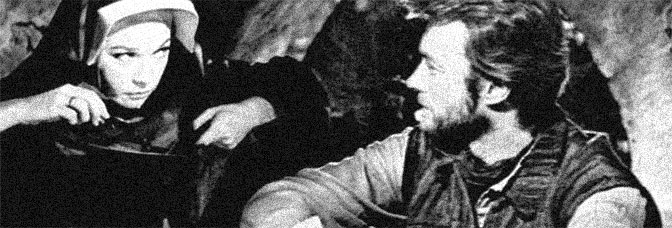
Two Mules for Sister Sara opens playfully. Then it gets serious. Then it gets playful. Then it gets serious. Then it gets playful. Director Siegel never lets it keep one tone for too long, not until the end, when he shows what happens when you take it all too seriously. After a hundred minutes of…
-
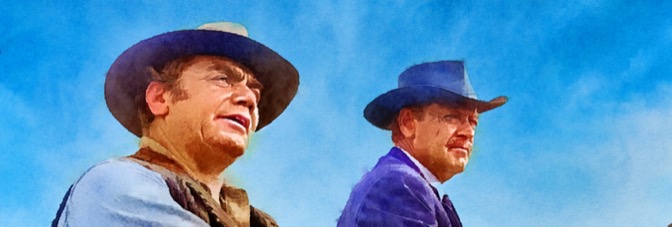
The Wild Bunch opens with a methodically executed heist slash shootout sequence. Director Peckinpah quickly introduces cast members, partially due to the dramatic plotting, mostly due to Lou Lombardo’s fantastic editing. All juxtaposed with some kids watching ants kill scorpions. The Wild Bunch opens with one heck of a declarative statement. Peckinpah wants to look…
-
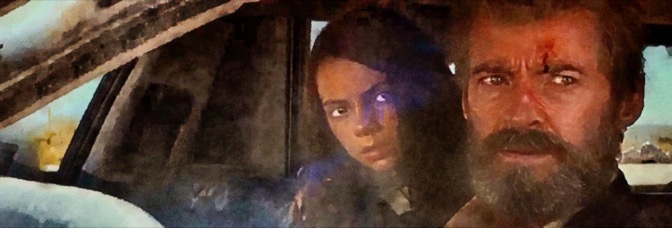
The strangest thing about Logan, at least in terms of the plotting, is how director Mangold is desperate to reference a film classic–one with a plot perfectly suited to what he’s purportedly trying to do with Logan–and he doesn’t follow it through. In any of the neat ways he could. Instead, he goes for obvious…
-

Extremely cheap but admirably executed micro-budgeted action movie starring Black South Africans; the apartheid government banned the film after two showings. Forty years later, it was been restored. Ken Gampu is the titular hero, a karate master, a knife master, and great football coach who has to unravel a football-related conspiracy. Gampu’s a strong lead…
-

Resident Evil: The Final Chapter opens, as usual (I think), with a recap of the previous Resident Evil movies. Star Milla Jovovich narrates; even after six movies, it always seems like Jovovich is just about to have a great scene as an actor in one of these movies and it never comes to pass. It’s…
-

Thunderbolt and Lightfoot is the story of men in all their complexities. Their desire for money, their desire for women, their desire for stylish clothes. Whether a young man–Jeff Bridges–or an older man–Clint Eastwood–how can any of us truly understand these deep, complex beings. I wish the film had that level of pretense, but it…
-

In many ways, Young Guns II is an improvement over the first. Geoff Murphy knows how to direct a Western, at least until he has to do a showdown scene and then he’s in trouble, but if it’s general Western action, he can do it. And he’s got the same cinematographer as the first movie,…
-
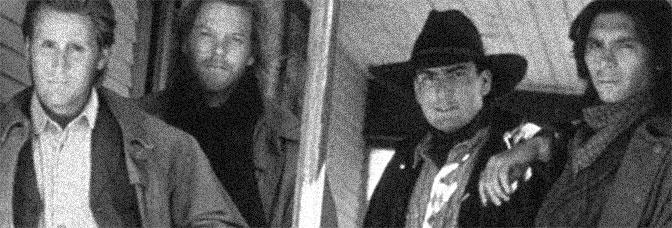
Young Guns is an Emilio Estevez vanity project, which was once a thing. Estevez lacks the screen charisma and acting ability, but it’s a confusing part. He’s Billy the Kid and he’s playing him like a manipulative but somehow still likable psychopath. For about half the film, John Fusco’s script can keep up with Estevez–director…
-

Two things about Ladyhawke without getting to the script or some of the acting. First, Andrew Powell’s music. It’s godawful; it’s stunning to see a director as competent as Richard Donner put something so godawful in a film. Intentionally put it in a film. It’s silly. It sounds like a disco cover of the “Dallas”…
-

Where The Postman succeeds, besides with the performances, most of its technical aspects, is with director Costner’s ability to find each character’s emotional reality in a scene. He achieves a sort of alchemist’s miracle, but not with lead into gold, but with saccharine into sublime. With one unfortunate exception, every emotional moment in the film…
-
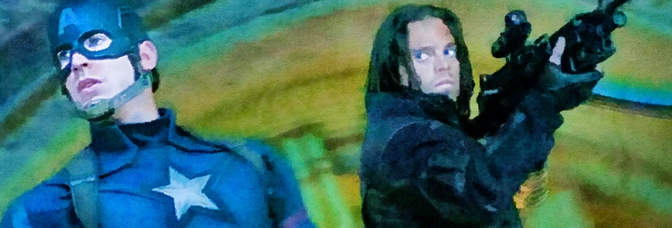
I wasn’t aware it was possible, but go-to Marvel superhero movie composer Henry Jackman is actually getting worse as he does more of these movies. His score for Captain America: Civil War is laughable, which is too bad, because if the film hit the thematic beats Jackman failed to achieve? Well, it wouldn’t fix the…
-

Lethal Weapon 3 is an expert action movie. Director Donner, cinematographer Jan de Bont, editors Robert Brown and Battle Davis do phenomenal work. Even though the cop action thriller plot of the film is its least compelling–dirty ex-cop Stuart Wilson is funding real estate development through arms dealing–those sequences are still good. The actors carry…
 The Stop Button