Category: Drama
-

Singular character study about eighth grader Elsie Fisher’s last week before graduation. It’s all from Fisher’s (eighth grade) point of view, with writer-director Burnham never breaking away except for the occasional concerned or bewildered moment for single parent Josh Hamilton. Adding to the narrative style are Fisher’s YouTube videos, which provide a stunning contrast. Amazing…
-

Here’s an all-encompassing theory to explain The Godfather Part III, based only on on-screen evidence (i.e. ignoring production woes, casting woes, rewrites, budget and schedule comprises, and whatever else). Francis Ford Coppola and Mario Puzo hate everyone in the film and everyone who will ever watch the film—maybe Coppola didn’t cast daughter Sofia Coppola in…
-
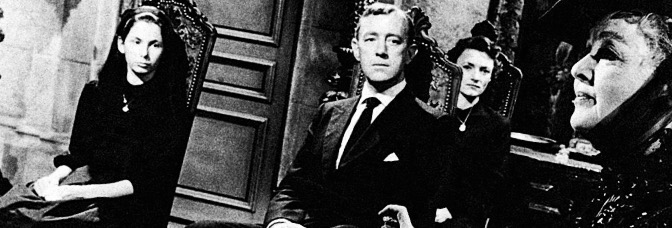
Peculiar character study slash mystery starring Alec Guinness as a staid British school teacher who meets his lookalike while in France. French Guinness tricks British Guinness into taking his place as a French blue blood, saddled with a wife, a kid, a mistress, and a failing business. Only British Guinness comes to love all those…
-

Hard Surfaces is pretty thin. Sometimes it’s translucently thin. The film itself never has any depth, but fairly regularly the actors at least show they could give it some depth, if it weren’t for the thinness. Ostensibly the film’s well-meaning, but that quality comes off as fake. Like writer (and director) Brown is using trying…
-

Room is the story of a woman (Brie Larson) and her son (Jacob Tremblay) who, after seven years in captivity by rapist Sean Bridgers (Tremblay being born as a result of one of those rapes), escape and have to adjust to the outside world. The film is from Tremblay’s perspective, with some occasional narration. Though…
-

Crooklyn is a series of memories. They’re mostly the main character’s memories—and if they’re not, they’re definitely from her perception. The memories start in the spring and go through the summer. Director Lee and his cowriters—and siblings (Crooklyn is semi-autobiographical) Joie Lee and Cinqué Lee frequently change the pace of the memories. Some are long…
-
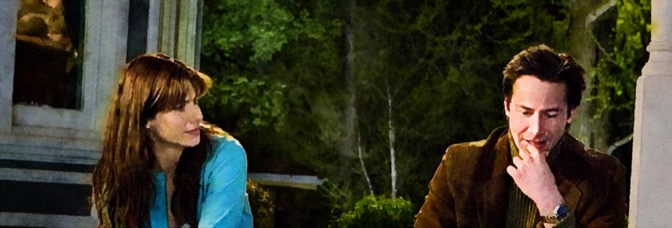
There may be a pseudo-sly Speed reference in The Lake House, which reunites stars Sandra Bullock and Keanu Reeves, but it’s a spoiler. Unfortunately it is not Bullock’s Speed 2 co-star Jason Patric as her wet towel boyfriend (Patric infamously replaced Reeves in the sequel). Instead, Dylan Walsh is the wet towel boyfriend. His performance…
-

Jean Simmons doesn’t smile until over halfway through The Happy Ending. The movie runs almost two hours and has a present action of like eighteen years. The first eight minutes are a mostly wordless summary of John Forsythe courting Jean Simmons in the early fifties. The time period’s not important–even though the film taking place…
-
With Hello Destroyer, writer and director Funk spares down a character study. He saps the action from it–and there’s a lot of potential action, as the character the film studies is a rookie pro hockey player (Jared Abrahamson). Abrahamson’s a quiet loner who fits in well enough with the team, but is rather passive. Outside…
-

After setting up Goldie Hawn and William Atherton as the protagonists, Sugarland Express takes about an hour to get back to them. Hawn and Atherton have an amazing setup–he’s about to get out of prison and has been transferred to pre-release. Hawn comes to visiting day but to break him out. She’s just gotten out…
-
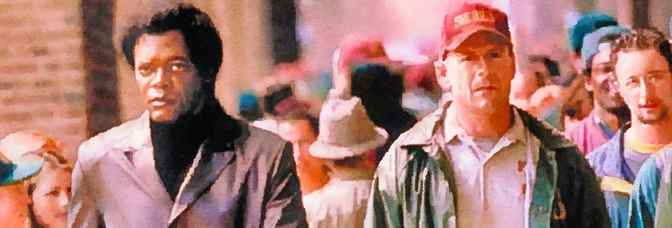
If Unbreakable wasn’t a one hour and forty-six minute self-aggrandizement from wannabe mainstream-auteur (notice, not mainstream auteur) Shyamalan, it’d somehow be even worse. Because at least if Shyamalan is intentionally doing all these things, making all these choices, it’s a cohesive flop. If he’s not, if the mishmash elements are actually mishmash (like, you know,…
-

Most of Raging Bull is about boxer Jake La Motta’s quest for the middleweight championship belt and takes place in the forties. The film opens with La Motta (Robert De Niro) in the sixties–out-of-shape, nose disfigured from the boxing; it’s a brief introduction then a fast cut to De Niro in shape and boxing in…
-

There are three different things going on throughout The Buddy Holly Story. Well, more than three but there are the three big different things. There’s Robert Gittler’s screenplay, which has one narrative gesture for most of the film. There’s Gary Busey’s lead performance, which is resolute in both its sincerity and its anti-inscrutability. And there’s…
-

The most impressive thing about Why Do Fools Fall in Love isn’t how well Tina Andrews’s script does with exposition. Not just exposition as it plays out, but how Andrews foreshadows later revelation. The film is and isn’t a biopic of singer Frankie Lymon, focusing instead on his three widows–and is and isn’t a biopic…
-
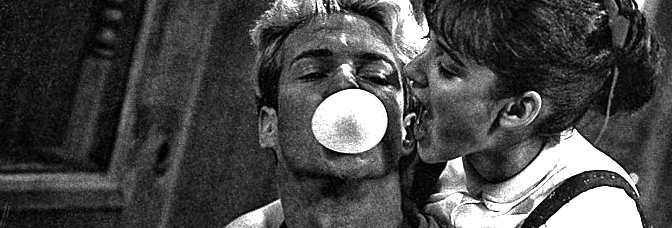
There’s no point to Great Balls of Fire! As a biopic it’s shaky–lead Dennis Quaid only gets to be the protagonist when he’s not being too despicable, which isn’t often and the film has to distance itself from Winona Ryder, playing Quaid’s love interest. And thirteen year-old cousin. So it’s understandable director McBride and co-screenwriter…
-
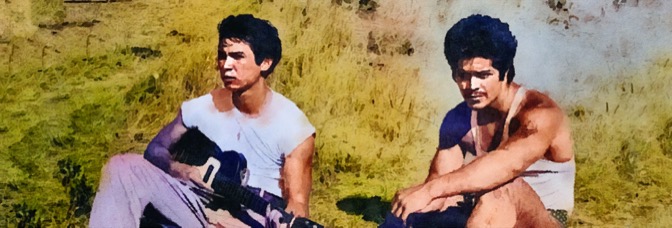
La Bamba is a perfectly adequate biopic of fifties rock and roll singer Ritchie Valens, who died at seventeen in a plane crash. Very twenty-five year-old Lou Diamond Phillips plays Valens. He’s adequate. He lip-synchs all right, though the performances (Los Lobos covers Valens’s songs) almost never sound right acoustically. When Phillips shows off his…
-

Screenwriter Rod Serling really likes to employ monologues in Seven Days in May. John Frankenheimer likes to direct them too. And the actors like to give them. Because they’re good monologues. The monologues give all then actors fantastic material. Everyone except George Macready, who isn’t the right kind of scenery chewer for Seven Days. Maybe…
-

Despite excellent lead performances, Tumbleweeds is almost entirely inert–dramatically speaking. Janet McTeer is a thirtysomething single mom with bad taste in men who drags tween daughter Kimberly J. Brown all around the country after her latest romance goes bad. The romances never go too bad because McTeer has a preternatural ability to stay away from…
-

Who’s Afraid of Virginia Woolf? opens with this gentle, lovely music from Alex North. It’s night, it’s a university campus, a couple is walking silently as the credits roll; the music’s beautiful. Then the couple–Elizabeth Taylor and Richard Burton–get home. And pretty soon they start yelling at each other. And they don’t stop until the…
-

At no point in Creed II does anyone remark on the odds of Michael B. Jordan boxing the son of the man who killed his father. It’s all matter-of-fact. The sportscasters all seem to think it’s perfectly normal Dolph Lundgren spent the thirty-ish years since Rocky IV training his son to someday defeat the son…
-

Widows is very real. You know it’s very real and not Hollywood because it takes place in Chicago and it’s real Chicago and not Hollywood Chicago. Though Robert Duvall, who gives a fine performance, does make it feel a little like Hollywood Chicago. But it’s also real because Liam Neeson has nose hairs. And because…
-

The Other Side of the Wind opens with two very ominous notes. Well, two and a half. The first is a text card explaining the film’s history, but not much about its resurrection. For example (and here’s the half ominous note), was it director Welles’s idea to do multiple aspect ratios? It makes sense, but…
-

My Left Foot is told in flashback. There’s the present–kind of glorified bookends–when Christy Brown (Daniel Day-Lewis) is a successful adult and flirts with his nurse (Ruth McCabe)–and then the past, which recounts Brown growing up poor, with cerebral palsy, in 1940s Dublin. Hugh O’Conor plays Brown until he’s seventeen or eighteen, then Day-Lewis takes…
-
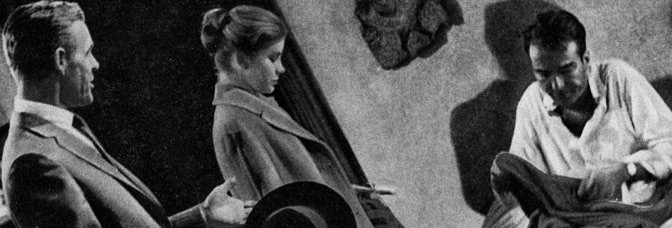
The most frustrating thing about Lonelyhearts is Donehue’s direction. While not a television production, Donehue directs it like one. He’ll have these shots of star Montgomery Clift baring his soul to girlfriend Dolores Hart and Donehue will stick with Clift, no reaction shot on Hart much less letting her hear the whole thing. Of course,…
-

Despite producing the film himself, top-billed James Mason doesn’t have the best part in Bigger Than Life. Instead, Barbara Rush–as his suffering wife–gets it. Mason’s a man with a life threatening chronic illness who has to take special medication. Slowly–though not too slowly–that medication starts making him psychotic. Rush is the faithful wife who ignores…
-
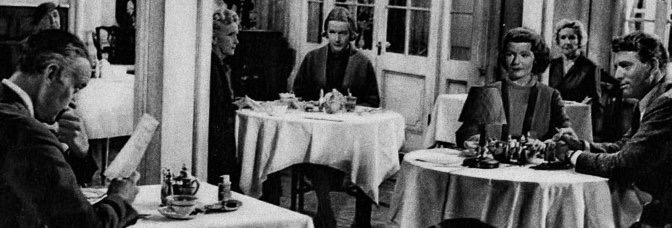
Despite taking place in a very English hotel with very English residents–all of them long-term residents, not temporary guests–Separate Tables hinges almost entirely on the Americans. Burt Lancaster is one such American. He’s a regular resident (even ostensibly engaged to manager Wendy Hiller; they’re definitely carrying on illicitly anyway). And Rita Hayworth is the other…
-
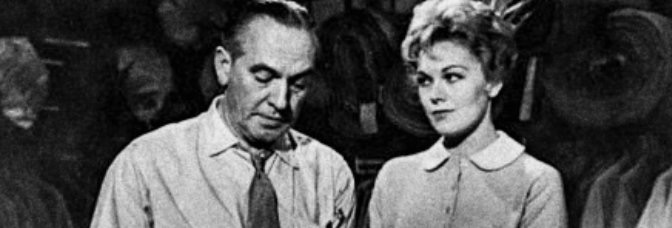
Paddy Chayefsky adapted his own play for Middle of the Night and there are some clear alterations with original intent. Fifty-six year-old widower Fredric March is in garment manufacturing. His first scene has him hanging out with the other old guys in the factory, kvetching about how there’s nothing to do but visit their children.…
-

There’s a lot going on in Lawn Dogs. Lots of good things, lots of strange things, lots of bad things; the worst is probably housewife Kathleen Quinlan’s lover molesting her daughter, Mischa Barton. The film doesn’t want to deal with it. Lawn Dogs is lots of visual splendor, courtesy director Duigan and cinematographer Elliot Davis–set…
-

Sometimes a Great Notion is all about the joys of toxic masculinity and apathy. At some points in the near two hour runtime, it might hint at being about the virtues of rugged American individualism, family, and maybe capitalism, but it’s not. Screenwriter John Gay avoids exploring those virtues like the plague or directly contradicts…
-

It takes a while for anyone in Sid & Nancy to be likable. Even after they’re likable, it’s not like they’re particularly sympathetic. They’re tragic, sure, which is director Cox and cowriter Abbe Wool’s point, but entirely unpleasant to spend time with. The film has a bookend–Sid (Gary Oldman) being taken into police custody for…
 The Stop Button