Category: Directed by Robert Wise
-

Star Trek: The Motion Picture: The Restored Director’s Edition occasionally feels like a fan project. Or at least a temp project. Like the new opening titles, set in gold. They look like they were done using an iPhone app. Then there are shots where they couldn’t find the original materials, so the picture suddenly looks…
-

Pretty good but should be a lot better considering the stars and director WWII submarine picture. Clark Gable is the commander who strong-arms his way onto Burt Lancaster’s boat to take it on a Captain Ahab suicide mission against a very successful Japanese destroyer. Good acting from the leads (almost great from Lancaster) and nice…
-

The Day the Earth Stood Still opens with these sensational titles. 3D text jumping out, set against the backdrop of space, Bernard Herrmann’s score at its loudest; the titles suggest the film is going to be something grandiose. It is and it isn’t. For the first act, director Wise moves quickly, short scenes setting up…
-

So much of The Sound of Music is exquisite, the film’s got enough momentum to get over the rough spots. The film has three and a half distinct sections. There’s the first, introducing Julie Andrews to the audience, then introducing Christopher Plummer and family to the Andrews and the audience, which then becomes about Andrews…
-

The Curse of the Cat People is apparently Kent Smith. Well, him and writer DeWitt Bodeen. Smith and Jane Randolph return from the first film, this one set over six years later. They have a daughter–Ann Carter in an almost perfect performance–who’s a lonely child. She eventually imagines herself a friend, personified by Simone Simon…
-

Star Trek: The Motion Picture is one of those imperfect films. No matter how many versions, there’s no way to fix one thing without breaking another–or it might just be broken all together. For example, I don’t know if I’d ever realized how focused director Wise is–during the first hour–on William Shatner’s slightly dangerous desire…
-
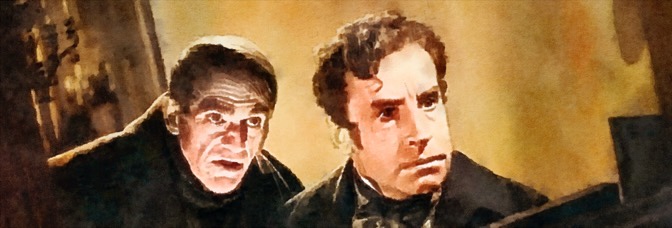
The Body Snatcher has half an excellent foundation. Nineteenth century medical genius Henry Daniell can’t escape his past associations with a shady cabman (Boris Karloff). These past associations being of the grave robbing variety. There’s also Daniell’s romance with his maid (Edith Atwater), which humanizes the character throughout the first half, since Daniell’s supposed to…
-

Mademoiselle Fifi is split down the center, roughly, into two parts. The first involves Simone Simon on the trip to her hometown. The second is when she reaches the town. The film takes place in occupied France during the Franco-Prussian War, but it opens with a title card presenting it as an analogue to World…
-

What makes The Haunting so good–besides Wise’s wondrous Panavision composition–is the characters. Yes, it succeeds as a horror film, with great internal dialogue (Julie Harris’s character’s thoughts drive the first twenty minutes alone and the device never feels awkward), but those successes are nothing compared to the character interactions. The Haunting chooses to be both…
-
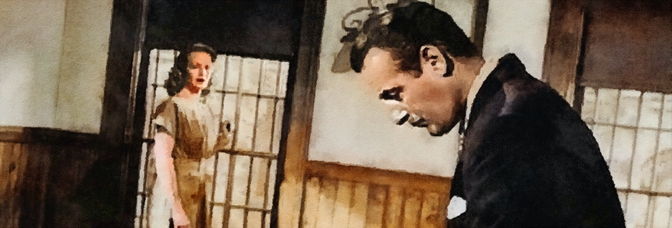
If you took a film noir and removed the noir, you might have something like Criminal Court. The plot is noir. An upstanding attorney (Tom Conway) accidentally kills mobster (Robert Armstrong) and runs off, unknowingly leaving his girlfriend (Martha O’Driscoll) to take the wrap. What does Conway do? Does he try to falsify evidence to…
-

In addition to being one of the more intentionally boring films ever made, Star Trek: The Motion Picture features some of the more amazing science fiction special effects. The work Douglas Trumbull does in this film is without equal–he makes the unimaginable visual. It’s astounding (and I was watching the pan-and-scan only “Special Longer Version”…
-

Three Secrets plays like a knock-off of A Letter to Three Wives, only without the writing. Secrets‘s problem is mostly with the writing. There are the three women–all of whom have secrets, except actually only two of them–played by Eleanor Parker, Patricia Neal, and Ruth Roman. The secret is each put a child up for…
 The Stop Button