Category: Directed by James Whale
-

For The Bride of Frankenstein, director Whale takes a contradictory approach. It's either more is more, or less is less. More music, all the time. Franz Waxman's frequently playful music rarely fits its scenes, unless Whale is going for a melodramatic farce, which he really doesn't seem to be doing. I kept hoping he would…
-

The Old Dark House is a strange film about strange people doing strange things. Director Whale and screenwriter Benn W. Levy rarely let the film get a set tone–unless one counts the consistent mix of comedy and horror. It’s not straight comedy; the comic elements tend to be either absurdly strange or pedestrian. Husband and…
-

The Invisible Man is a filmmaking marvel. First off, R.C. Sherriff’s screenplay sets things up speedily and without much exposition. The film introduces Claude Rains’s character through everyone else’s point of view–first the strangers he meets, then his familiars–all while Rains is front and center in the film. Even though he is, after all, invisible.…
-
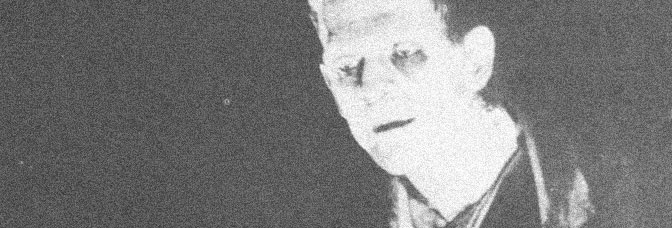
The eight millimeter digest version of Frankenstein removes all but three main characters. Colin Clive gets the most time, though loses all subplots and character, with Boris Karloff probably coming in second. It’s odd to watch Frankenstein and have the monster make so little impression but it’s clearly possible. Dwight Frye, for a while, makes…
-

I wish I knew if Remember Last Night? is supposed to be a knock-off of The Thin Man or if it’s just a highly coincidental release, coming a year later, with a similarly intoxicated, ritzy couple solving crimes as they get more intoxicated (Robert Young and Constance Cummings play the couple in this film). Remember…
-

I’m trying to imagine how Frankenstein looks on the big screen–maybe on one the size of Radio City Music Hall; James Whale fills the screen upward. He directs the viewer’s attention always up, starting with the first scenes in the tower laboratory. The frames are obviously filled with extensive detail, which video certainly does not…
-

It’s James Whale’s “Gilligan’s Island,” only with more rear screen projection, as a plane crash in the Pacific brings a varied bunch together on a tropical island. It’s a boring sixty-five minutes–the script’s real stagy, with a two or three week (there’s a lot of problems with time) break in the middle, with the second…
 The Stop Button