The Stop Button
blogging by Andrew Wickliffe
Category: Directed by Orson Welles
-
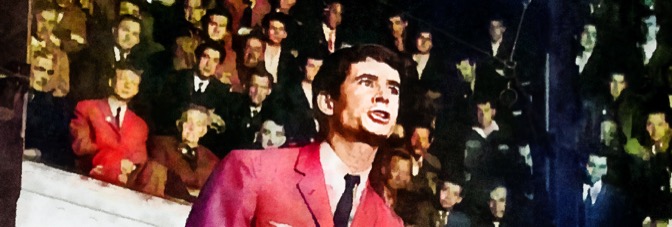
Given how much writer, director, and special guest star Welles cares about performances—not only does he dub over one of the other actors, he steals a juicy monologue from Michael Lonsdale—one would think he’d have seen the problem with star Anthony Perkins. Because everyone’s looping their dialogue in The Trial, Perkins gave this performance at…
-

There are two classes of performance in Macbeth, those who can only handle a double r-rolling and those who go for a triple r-rolling. Director, star and screenwriter Welles gets to do the triple. As does Jeannette Nolan as Lady Macbeth. Everyone else is only doing the double r-roll for their Scottish accent. Like much…
-

Singular Shakespeare adaptation from Welles. Based on Shakespeare’s HENRY plays, focusing on the Falstaff character (played by Welles), the film tracks the boisterous relationship between Falstaff and Prince Hal (someday Henry V), played by Keith Baxter. Henry IV (John Gielgud) strongly disapproves of the friendship, which distracts Baxter from warring like pretender-to-the-throne Norman Rodway. Truly…
-
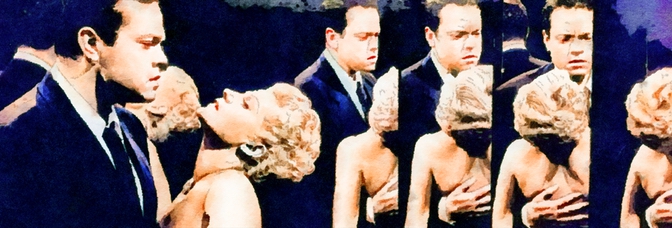
Singular film noir from Welles. It’s a family affair, with Welles writing, directing, acting and then wife Rita Hayworth playing the female lead. She’s the gorgeous, married rich woman, he’s the able-bodied Irish sailor. The film’s peculiarly, intentionally told tale of lust, hatred, and murder. Everett Sloane’s phenomenal as Welles’s boss and Hayworth’s husband. Some…
-

The Other Side of the Wind opens with two very ominous notes. Well, two and a half. The first is a text card explaining the film’s history, but not much about its resurrection. For example (and here’s the half ominous note), was it director Welles’s idea to do multiple aspect ratios? It makes sense, but…
-

Unfortunately, I feel the need to address some of the behind the scenes aspects of The Magnificent Ambersons. Not because I plan on talking about them, but because director Welles’s career is filled with a lack of control. There are always questions–what did editor Robert Wise do on his own, what did he do with…
-
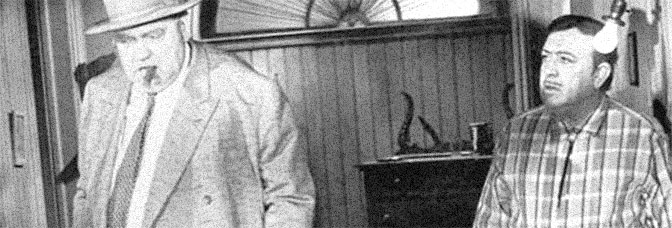
Touch of Evil is a visceral experience. Welles’s long takes and long sequences–in particular, the opening tracking shot, the apartment interrogation scene and the oil field interrogation at the end, these sequences depend on the viewer’s understanding of geography. Welles and cinematographer Russell Metty brilliantly establish the setting; then Welles does whatever he can to…
-

In Citizen Kane, director Welles ties everything together–not just the story (he does wrap the narrative visually), but also how the filmmaking relates to the film’s content. Kane’s story can’t be told any other way. That precision–whether it’s in the summary sequences or in how scenes cut together–is absolutely necessary to not just keep the…
 The Stop Button