The Stop Button
blogging by Andrew Wickliffe
Category: Directed by Frank Tuttle
-
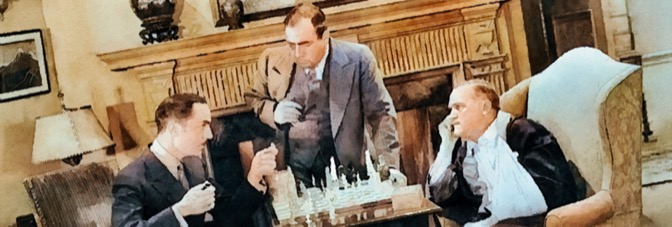
The most interesting part of The Benson Murder Case is the Black Tuesday setting. I missed the newspaper dates for the montage about the stock market crash so I’m not sure if they do the Black Tuesday or just a Black Tuesday, but the movie opens with broker Richard Tucker selling off all his clients’…
-
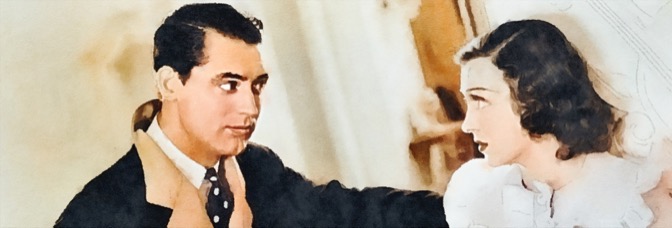
There’s a funny moment in Ladies Should Listen. As in a singular one funny moment. I can’t remember the joke because it wasn’t very good and was too busy being shocked at something vaguely amusing in the film, especially coming from Rafael Corio, who has the distinguished honor of giving the worst performance in a…
-

At one point during Hostages, I thought there might actually be a good performance in it somewhere. Czech freedom fighter Katina Paxinou faces off with her mother over her Resistance work. It has the potential for a good moment, turns out it’s just an adequate one (amid the sea of inadequate ones in the film).…
-

If it weren’t for the cast, there’d be very little to distinguish A Cry in the Night. John F. Seitz’s black and white photography is often–but not always–quite good, though director Tuttle struggles with the composition. He composes for the squarer Academy ratio, not widescreen. Cry in the Night is widescreen. And David Buttolph’s music…
-

If it weren’t so predictable, The Greene Murder Case would be a little better. Not much better–part of the film’s charm is the obvious foreshadowing, since director Tuttle’s obviously on a limited budget and he couldn’t do much anyway. There are no natural exteriors, which is fine; the one artificial exterior–Tuttle’s establishing shots tend to…
-

I wonder how Eugene Pallette felt–more, how his co-stars felt–about having the closest thing to a close-up in The Benson Murder Case. I’ve never been more acutely aware of shot distance than I was during the film. Tuttle has a standard pattern. Long shot–usually a lengthy long shot, sometimes an entire scene is one shot–followed…
-

As an example of a transitional sound film–Canary Murder Case was filmed as a silent, then reconfigured as a talkie–the film’s very interesting. It’s an early talkie (1929) so there’s no sound design–there’s rarely any noise besides the talking and few sound effects, the actors aren’t ready for talking (for the most part), and the…
 The Stop Button