Category: Directed by Steven Spielberg
-

The first act of Duel ought to be enough to carry it. Spielberg’s direction, Frank Morriss’s editing, even Jack A. Marta’s workman photography—it’s spellbinding. It even gets through lead Dennis Weaver calling home to fight with his wife and revealing to the audience he’s a wuss. See, last night he and the wife went to…
-

Catch Me If You Can is a spectacular showcase for Leonardo DiCaprio. Unfortunately, the rest of the film doesn’t exactly rise up to meet him, not the filmmaking, not the writing, not his costars. With the exception of co-lead Tom Hanks, who’s a whole other thing, the direction, the writing, the supporting cast, they’re all…
-

After setting up Goldie Hawn and William Atherton as the protagonists, Sugarland Express takes about an hour to get back to them. Hawn and Atherton have an amazing setup–he’s about to get out of prison and has been transferred to pre-release. Hawn comes to visiting day but to break him out. She’s just gotten out…
-
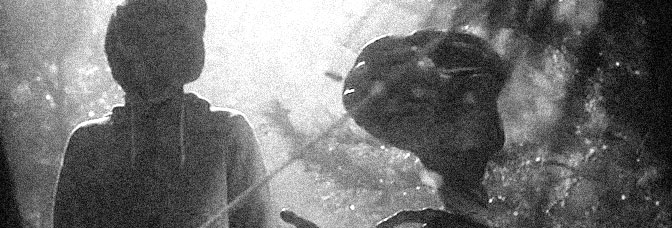
For E.T., Spielberg takes an incredible approach–every scene has to be iconic, every scene has to create a sense of nostalgia for it. It requires absolute control of the viewer and Spielberg’s only able to accomplish that control thanks to John Williams’s score. Every note in the score–and its corresponding image on screen–is perfect. As…
-

Lincoln is a political thriller. The vast majority of the film concerns the 13th Amendment and Lincoln’s attempts to get it through the House of Representatives. When Lincoln isn’t pursuing this story (or when director Spielberg and screenwriter Tony Kushner’s tangential subplots are too thin), the artifice starts showing. Not even Daniel Day-Lewis, in a…
-
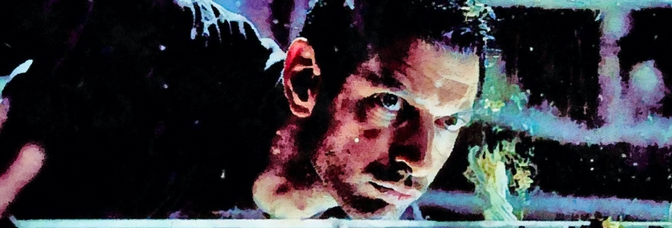
Even though The Lost World: Jurassic Park is pretty bad, it features some of Steven Spielberg’s more interesting work as a director. It’s a b genre picture, with a huge budget and Spielberg directing it. It even has a cute King Kong reference. It’s a singular film in Spielberg’s filmography—even when he does a terrible…
-

Two big things I noticed about Jurassic Park. First, it’s still a superior use of CG. It really shows how digital effects do not get better with technology or budget or whatever; being used by a good filmmaker makes all the difference. And Spielberg does a fine job with Jurassic Park. It’s an incredibly impersonal…
-
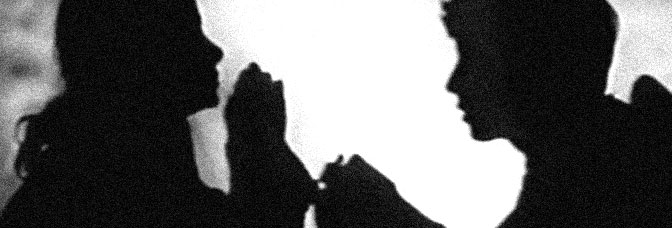
Amblin’ might have more charm if I cared about hippies. The film should be called, The Adventures of Two Hitchhiking Hippies. Or one and a half hippies. I’m not even sure they’re supposed to be hippies, maybe just kind of hippies. There’s no dialogue in the film (oddly, it’s not even implied the two protagonists…
-

The biggest development, in terms of script, in Indiana Jones and the Kingdom of the Crystal Skull might actually be George Lucas’s fingerprints. Between Last Crusade and this sequel, Lucas created the “Young Indiana Jones Chronicles” television series and introduced the idea of canon to the series. As an example, in Crystal Skull, Harrison Ford…
-

Indiana Jones and the Last Crusade shows off Steven Spielberg’s comedic skills. Not just in his direction of the scenes between Harrison Ford and Sean Connery, but also in the film’s overall tone. At the beginning, as River Phoenix is running from the bad guys on the train, Spielberg homages Buster Keaton (and rather well).…
-

I can understand Chinese people being upset with the stereotypes–Spielberg and company basically lift all the anti-Japanese stereotypes from early 1940s American films and apply them to the Chinese–but at least they’re only goofy and mischievous. The Indians in the film are downright evil. Temple of Doom‘s atrocious script (I suppose Willard Huyck and Gloria…
-

Don Siegel had an anecdote about the length of titles. He showed them to his boss, who kept asking for them to be longer, then showed them to the boss again, telling him each time he’d made the changes. In fact, he had not–his boss was simply familiar with the titles and couldn’t gauge the…
-
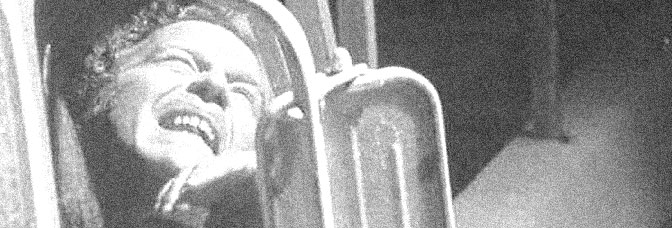
This version–now called ‘The Director’s Cut’–originally came out as ‘The Collector’s Edition’ maybe ten years ago (maybe less). The most striking thing about this cut is Dreyfuss’s insanity. In this version, he’s totally nuts… Spielberg edits back in (from the original, excised from the Special Edition) a couple significant scenes. First, showing off Roberts Blossom–one…
-

I don’t know where to start with Close Encounters of the Third Kind. The jokey open would be something about listing the defects and not having any, but then flipping it and not being able to list everything Spielberg does right because his successes are so difficult to work out, particularly in to an easy-to-read,…
-

The first half of Jaws–before the boat, when it becomes a different film–might be the most perfectly made film ever. The second half isn’t less perfectly made, but it’s its own thing, not easily comparable to any other film; that first half deals in traditional filmic standards and does so with singular success. Verna Fields’s…
-

Rip-roaring, serial-inspired adventure set in the 1930s has archaeologist/adventurer/heartthrob Harrison Ford traveling the globe to keep the Nazis from getting their hands on the Lost Ark of the Covenant. Exciting, well-written (by Lawrence Kasdan), and beautifully directed by Spielberg. John Williams’s score is so important it could be top-billed. Sometimes moves a little too fast…
 The Stop Button