Category: Directed by Steven Soderbergh
-
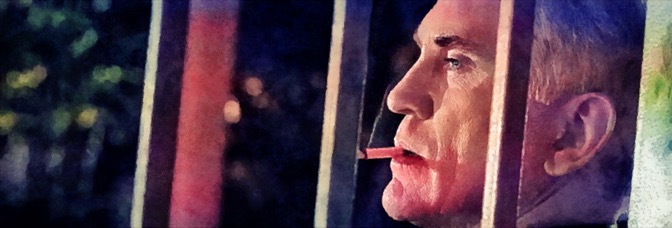
The Limey is all about the foreshadowing. It’s about flashbacks, flash-forwards, and flash asides, but the foreshadowing figures into all of those devices. It’s got a “twist” ending, which then informs previous scenes but not like figuring out Terence Stamp is a ghost or whatever. Instead, it’s knowing something about why he half-smiles—and only something,…
-
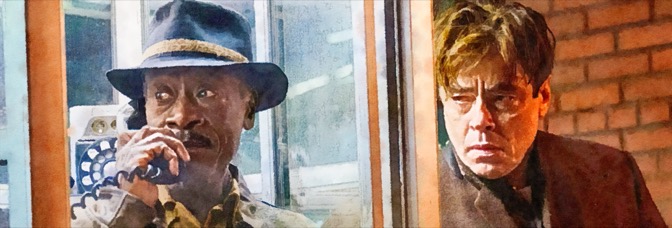
I spent most of No Sudden Move hoping against hope it’d somehow end well. Unfortunately, by the end of Move, I’d forgotten it started as a potential pulpy franchise for Don Cheadle (twenty-five years after Devil in a Blue Dress maybe he could get the one he deserved). The third act is such a slog,…
-

Right up until the third act, Out of Sight has a series of edifying flashbacks, which reveal important facts in the ground situation; almost enough to set the start of the present action back a few years. The film starts in flashback, which isn’t immediately clear, and then the series of consecutive flashbacks builds to…
-
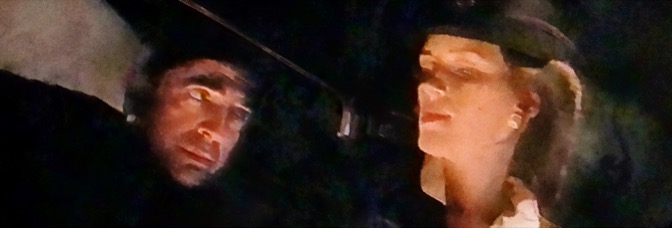
The Quiet Room really, really, really, relies on its twist. The ending is really predictable too; like, director Soderbergh and writer Howard A. Rodman do way too well on the foreshadowing. Because Room is a slightly exaggerated noir–part of the “Fallen Angels” TV anthology–nothing really needs to be foreshadowed. There’s a twist Soderbergh and Rodman…
-

Haywire’s plotting is meticulous and exquisite. And entirely a budgetary constraint. It’s a globe trotting, action-packed spy thriller with lots of name stars. The action in the globe trotted areas, for instance, is more chase scenes than explosions. Haywire doesn’t blow up Barcelona, lead Gina Carano chases someone down the streets. She doesn’t land a…
-

Watching Soderbergh’s first film, Winston, it’s interesting to see what he continued developing and what didn’t exactly make it. There’s some lovely ambient music here, as Soderbergh opens the film gently, with his two protagonists on the steps of some building at a university. Most of the film is shot around an unnamed university and…
-
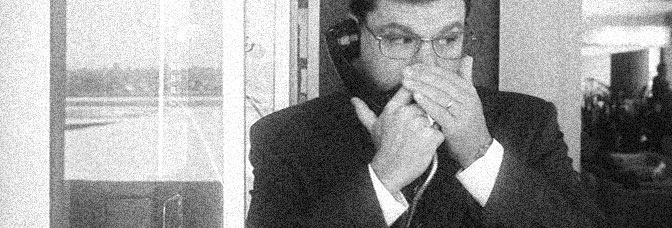
How does Steven Soderbergh pick projects–more, what kind of artist’s statement would he make? The Informant! is his best film–among all his other rather good films–in a while and it owes more to what he learned on Ocean’s Eleven 12 and 13 than on any of his other films. It’s a great time, but it’s…
-

Bolivia didn’t do Butch and Sundance any favors and it doesn’t do Che any either. Che: Part Two isn’t just a downer for Del Toro’s franchising revolutionary (he’s bringing the revolution to Bolivia, whether they want it or not), but it’s an entirely depressing film too. There’s probably not a positive way to tell this…
-

There’s a majesty to Che: Part One, the endless, blue Puerto Rican (I think) sky standing in for Cuba. Soderbergh loves that sky. Soderbergh’s Panavision frame doesn’t allow for much in the way of lyricism–I think the first shot of that nature comes in the last twenty minutes of the film. It’s a great looking…
-

Two major things about Soderbergh’s approach to a memoir adaptation. They’re somewhat connected, so I might not manage to separate them out. King of the Hill has no frame, it has no narration. It has no context. It does not feel, at all, like a “true” story because there’s no attempt to classify itself as…
-

A friend of mine thinks this entry is the series’s most successful, but–while it is a tad confrontational–I prefer the outright hostility to the average viewer the second one exhibits. Ocean’s Thirteen seems to be made more for the remaining audience. The people who got Twelve. The scenes in Mexico, in particular, are the sort…
-

The amusement factor. Does that term even make any sense? Ocean’s Twelve is, in case anyone watching it was confused (which I find hard to believe, but of the principals, only George Clooney makes exclusively smart movies so Brad Pitt and Matt Damon fans are suspect), about enjoying itself. It throws itself a party no…
-

Pointless outing from a disinterested Soderbergh about Franz Kafka (Jeremy Irons) finding himself in a very Kafka-esque (wink wink) mystery involving a secret organization and various kinds of intrigue and corruption. Irons is fine in the lead, whereas sidekick Jeroen Krabbé is excellent. Love interest Theresa Russell is godawful. Soderbergh’s technical work is great, he…
 The Stop Button