The Stop Button
blogging by Andrew Wickliffe
Category: Directed by John Ford
-
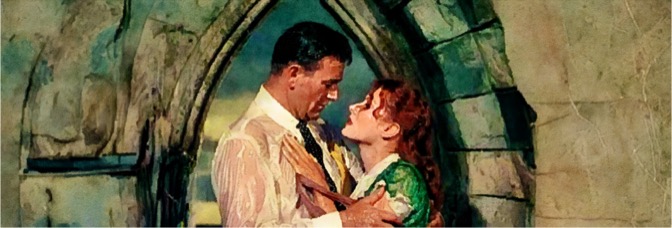
The Quiet Man starts as a loving postcard tour of the Irish countryside. It’s pastoral, romantic, funny, human. Son of Ireland-gone American John Wayne returns home and immediately falls in love with neighbor Maureen O’Hara. Unfortunately, despite O’Hara having similar inklings, her big brother is Wayne’s new nemesis, Victor McLaglen. It’s this exceptionally lush, tender,…
-
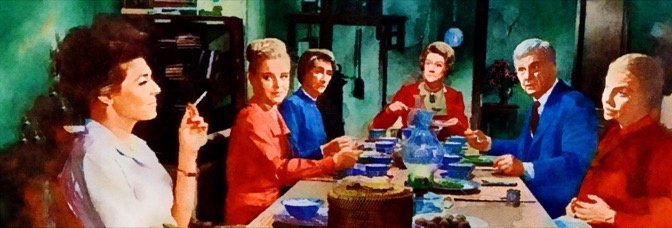
First, it’s actually 8 Women; Jane Chang doesn’t count because she’s not white. Though I suppose it could just be counting good Christian women, then Anne Bancroft doesn’t count. Women is a Western, just one set nearer to modernity and not in the American West. Instead, it’s about a mission in China on the border…
-

Smack-dab in the middle of The Informer is a romance between IRA commander Preston Foster and his gal, Heather Angel, sister to an IRA man (Wallace Ford). Foster and Angel steal moments together on one fateful night, tragic circumstances giving them unexpected time with one another, but those same circumstances sort of foreshadowing their very…
-

Until the action-packed last thirty minutes, Stagecoach is a class drama. A group of strangers and acquaintances are in a stagecoach, traveling West, post-Civil War. It takes fifteen minutes at the start of the film to get them in the coach, with some of the time spent on establishing the characters (and why they’re traveling),…
-
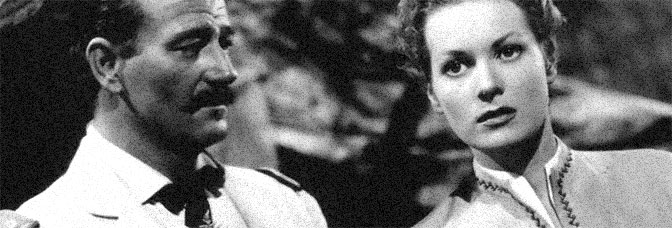
Rio Grande doesn’t have much going for it. The best performance is probably Ben Johnson, who isn’t even very good, he’s just not as bad as everyone else. Harry Carey Jr. and Victor McLaglen aren’t good, but they’re likable. Carey’s performance is just weak, while McLaglen gets saddled with the silly, comic relief role of…
-

The Grapes of Wrath starts in a darkened neverland. Director Ford and cinematographer Gregg Toland create a realer than real Oklahoma for protagonist Henry Fonda to journey across. The locations and sets aren’t as important as how Fonda (and the audience) experience it. It’s actually rather hostile for this beginning. It’s all about Fonda getting…
-
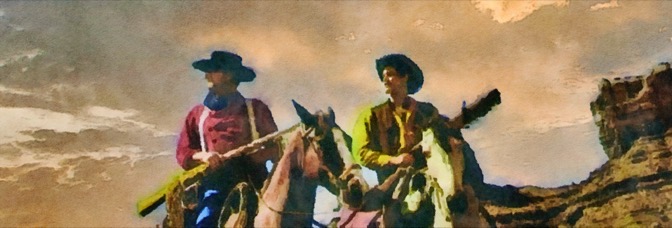
John Ford is never trying to be discreet with The Searchers, he’s just not willing to talk down to the audience. In the first ten minutes of the film, he and screenwriter Frank S. Nugent quickly establish John Wayne’s character and his relationship with his family. Ford, Nugent, Wayne and the rest of the cast…
-
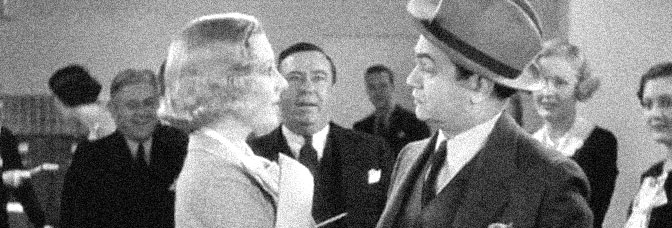
The Whole Town’s Talking has some peculiar third act problems, but it also has this extraordinary first act set over three scenes and twenty-some minutes, which evens things out. Some of the problem might stem from Town’s plot–mild-mannered office clerk Edward G. Robinson just happens to look like a famous gangster and is falsely arrested.…
-
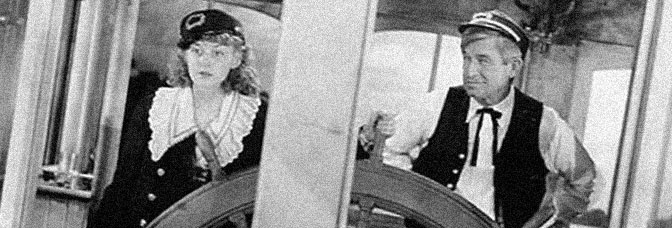
The best scene in Steambout Round the Bend is the wedding between Anne Shirley and John McGuire. Neither Shirley nor McGuire is particularly good in the film, but McGuire’s about to be hung and so they’re getting married. Steambout is often a comedy and Eugene Pallette–as the officiating sheriff–tells some really bad jokes at the…
-

John Wayne gets first billing in The Long Voyage Home, but the picture really belongs to Thomas Mitchell, Ward Bond and Ian Hunter. The film’s a combination slash adaptation of four one-act plays–which is somewhat clear from the rather lengthy sequences tied together with shorter joining scenes–and while Wayne gets one of his own, it’s…
-

Every eight years or so, I watch Drums Along the Mohawk to see if it gets any better. According to my cursory notes from my last viewing, it apparently has gotten a little bit better. As the titles rolled, I was hopeful–it is John Ford after all (his first color film) and screenwriters Lamar Trotti…
-
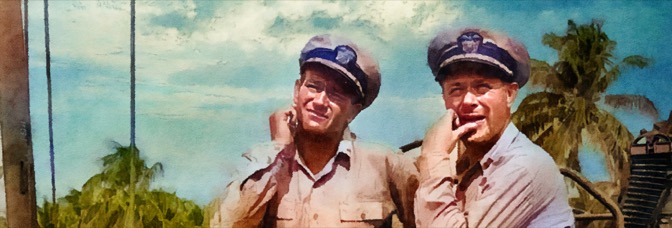
They Were Expendable has a gradual pace. Not knowing the film’s subject matter–just genre–going in, it all unfolded quite deliberately in front of me. The opening is a PT boat exercise. The film’s special effects are spectacular; it’s impossible to tell what’s an effect and what’s an actual boat in the water. These scenes–there are…
-

Even with the overbearing music and the strange lighting for emphasis (play-like, it dims to concentrate attention on an object or person), lots of Mary of Scotland is rather well done. Ford’s got some excellent shots and, at times, creates anxious scenes. It’s hard to get particularly excited during most of the film because, while…
-
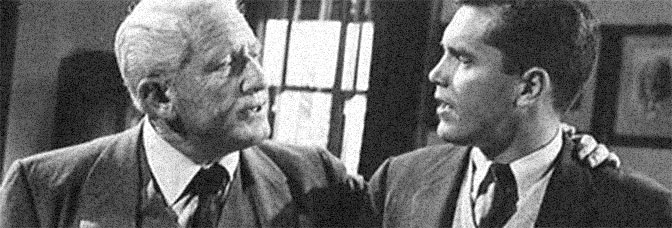
While the title refers to politics, The Last Hurrah also, unfortunately in some cases, provided to be the last hurrah of a number of fine actors as well. It’s a fitting–I can’t remember the word. It isn’t eulogy and tribute seems intentional. I don’t know if Ford knew he was making the last film like…
-
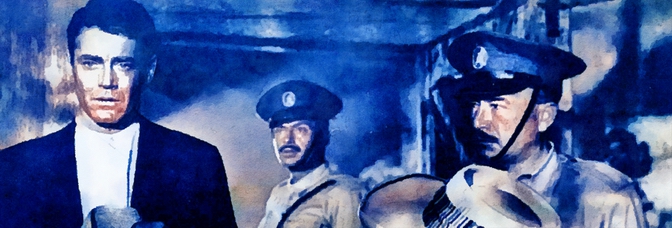
Strange experimental piece from director Ford about a fascist South American country hunting and executing its Catholic priests. The principal actors are almost entirely White, the extras native Mexicans (the film is shot on location in Mexico), which often disappoints, particularly with lead Henry Fonda and J. Carrol Naish. Fonda’s just too earnest whereas Naish’s…
-

Outstanding, ambitious biopic of Samuel Mudd (Warner Baxter), the doctor who unknowingly treated John Wilkes Booth and ended up tried for treason for his trouble. Fantastic performances from Baxter and Gloria Stuart as Mrs. Mudd. But Ford’s direction–along with Nunnally Johnson’s script–really put the film over the top; it’s beautifully produced, with Ford ably toggling…
-

Twenty-one years after they made RED DUST, director Ford, star Clark Gable, and screenwriter John Lee Mahin reunite for another adaptation of the Wilson Collison’s play. This time the action is in Africa (beautifully filmed on location) and Gable’s now 25 years older than his love interests (Ava Gardner and Grace Kelly). Great performance from…
 The Stop Button