The Stop Button
blogging by Andrew Wickliffe
Category: Directed by Charles Chaplin
-
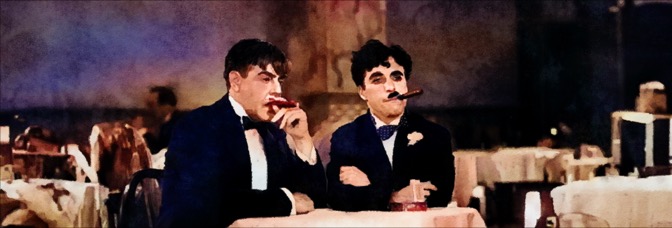
About halfway through City Lights, I realized most of the gags repeat. Especially when it’s Chaplin and his de facto sidekick, Harry Myers. But instead of making the bits seem rote, the repeat value just makes them funnier. There are some differences in how the jokes work, but not very much; Chaplin also lays into…
-

Some time after the halfway point in The Kid, it becomes clear the film isn’t going to end badly for its leads. Charlie Chaplin is the tramp, Jackie Coogan is his ward (a tramp in training). Chaplin, as a director, is fairly restrictive. Most of the action takes place on a few streets, primarily outside…
-

The Circus has a melancholic tone it doesn’t need and one director Chaplin is never fully invested in. The first half of the film is a series of fantastic gags–well, except the stuff with ring master Al Ernest Garcia being abusive to his daughter, played by Merna Kennedy. But the rest of it is hilarious.…
-

Chaplin’s got a real problem with visual continuity in Recreation. At first, he does really well. The actors move–through a park–from left to right. Helen Carruthers is on a bench with a prospective beau (Charles Bennett), then she leaves him and moves right. Chaplin (as the Tramp) enters and moves right to follow her. Eventually…
-

The best thing about His Trysting Place is probably Frank D. Williams’s photography. Chaplin’s athletics are impressive, but he doesn’t have much use for them. They’re most exciting during his food fight with Mack Swain. The food fight itself isn’t particularly funny–until the end–but Chaplin looks like he’s flying at times. Trysting is about two…
-

Chaplin opens His Prehistoric Past setting it up as a dream sequence, which lets the viewer know the outcome can’t be too dramatic. But the setup is immediate–Chaplin falls asleep on a park bench–so the more relatable elements in the dream don’t have much substance. In the dream (the majority of Past), Chaplin is a…
 The Stop Button