The Stop Button
blogging by Andrew Wickliffe
Category: Batman comics
-

I wasn’t expecting much from this issue; the team of writer Len Wein, penciller Marshall Rogers, and inker Dick Giordano hasn’t impressed in their one-and-a-fifth (they did a bookend on a reprint) issues of Detective so far. Wein’s writing a sequel to Rogers’s arc with Steve Englehart, trying to maintain continuity, like Batman hallucinating a…
-

When Steve Englehart started his Detective run, he quickly settled on a fascist, macho narration style to describe Batman and his male perfection. When Hugo Strange showed up and proved to be just as cut, the two men complimented each other’s physiques and prowesses, with Strange’s evil assistant lady making fun of them. At the…
-

Despite my youthful indiscretions in reading the famed Steve Englehart and Marshall Rogers, I had no idea what came after it. Turns out neither did DC at the time, since this issue’s got Len Wein, Rogers, and new inker Dick Giordano doing three new pages around a reprint from 1971. Batman and Commissioner Gordon go…
-
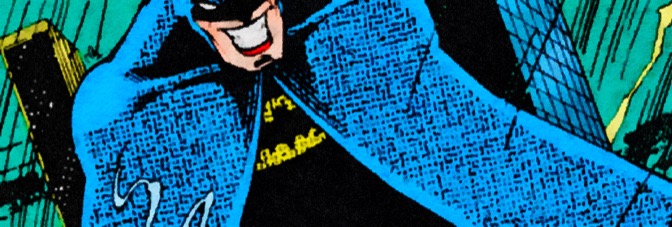
I either made a crack about Steve Englehart writing the narration for Detective Comics for the “Batman: The TV Show” announcer, or I thought about making the crack. This issue Englehart’s back at it, ad nauseam. Then Chief O’Hara shows up doing banter, and maybe it’s supposed to be a grim and gritty remake of…
-

So, reading this issue—the first of the Joker Laughing Fish two-parter—it’s clear why the comic’s got such an excellent reputation. Even with the utterly banal, fascist narration and Batman talking like a tool, it’s a great comic. Four things happen in the comic, all excellent for one reason or another. First, Batman goes to confront…
-
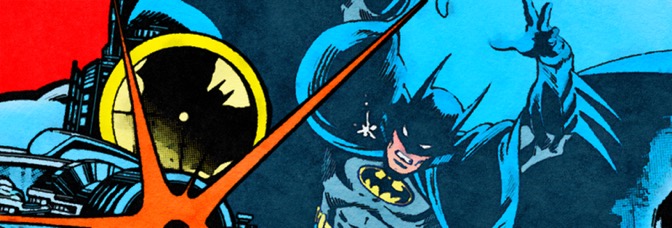
When I was eleven, I first read this comic in the Greatest Batman Stories Ever Told hardcover. Then there was the next part in Greatest Joker. It’d be years before I could read the complete Steve Englehart, Marshall Rogers, and Terry Austin arc. But this issue is where it all started. So as I break…
-

Steve Englehart writes Bruce Wayne as a narcissistic asshole who bullies and psychologically abuses ward Dick Grayson. Grayson, for his part, has drunk the Kool-Aid; at one point, he talks about how mental illness is no excuse, and at another, he waxes on about Batman’s such a great man. It’s such weird, bad writing. Though…
-

I’ve the sneaking suspicion last issue, when the evil nurse commented on Hugo Strange and Batman complementing each other’s physical and mental prowess when they should be fighting, it wasn’t writer Steve Englehart acknowledging the absurdity of the machismo; it was him making fun of the silly woman for not getting it. There’s a scene…
-
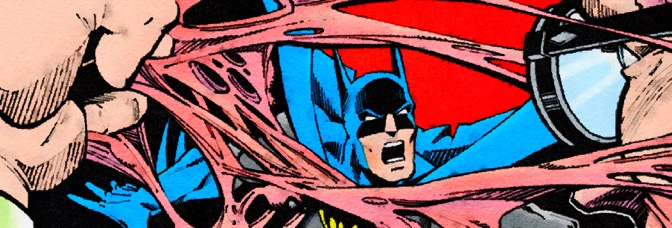
So, I figured out where Steve Englehart and Marshall Rogers’s Detective Comics belongs. As a comic strip in late seventies Playboy. Seriously. Rogers’s art is detailed but plain, intricately designed but not artsy. Englehart’s exposition is childish—“comic book-ish”—and treats Batman as a fascist action figure, but it’s incredibly consistent. Lots! Of! Declarative! Statements! Plus, this…
-

Batman ‘89 ends far better than it should, but still disappointingly. Writer Sam Hamm doesn’t go for an action-packed Batman finale, instead letting Bruce Wayne do the final showdown, which ought to emphasize Billy Dee Williams’s Harvey Dent, only doesn’t. It very strangely reduces Michael Keaton’s Bruce Wayne material as well. Hamm seems to know…
-

There’s a lot to be said about this issue, but the “highlight” has got to be when writer Steve Englehart describes Batman as the “pensive prince of shadows.” This line comes just before Batman goes to the Batcave and yells, “I’m the goddamn Batman,” to himself as a positive self-reinforcement. I’m only slightly exaggerating; Englehart…
-

Why does Steve Englehart’s writing sound like he’s doing a spec script for “Batman: The TV Show” cliffhanger narration? I can’t decide if it’d be better if he’s serious and thinks it’s good writing to treat your readers as infantile or if he’s doing it because he’s being condescending to the material. Either way… lousy…
-
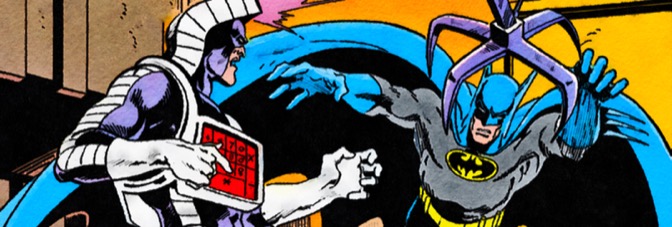
At least the art’s better. I can’t imagine how this issue would read without it. Marshall Rogers is still way too design-focused, with most of the action taking place against blank backgrounds, but when there is scenery, it’s excellent. And Terry Austin’s thin, dark inks are perfect, particularly on the Batman pages. But the writing’s…
-

In my youth, I never liked these “solve-the-mystery-yourself” stories. To the degree, I negatively associated them with writer Bob Rozakis. However, I got over it eventually, instead associating Rozakis with bland, cloying stories, much like the feature he contributes to this issue. The art’s from John Calnan, and the inks are Vince Colletta. I’m unfamiliar…
-

The feature has Ernie Chan and Vince Colletta art and all the visual failings such a pairing promises. But the story’s… oddly… good? A Silver Age Batman villain—The Signalman—returns for a bunch of themed heists. What makes it interesting is how well Signalman does against Bats. Len Wein writes; Signalman has a lot of bravado…
-

I’ve never heard of writer David Vern before, but I hope it’s a while before I read another of his comics. The Batman feature’s not the worst thing in the world, but it’s pretty annoying thanks to the Ernie Chan and Frank Giacola art. Also, the story’s written like a Hostess Fruit Pie advertisement, like…
-

I went into this issue expecting the back-up—Black Canary versus the Calculator, continuing writer Bob Rozakis’s back-up from last issue—to be better than the feature, which wraps up guest star vigilante the Black Spider’s first appearance. I was wrong. While the feature is not good at all, the back-up is even worse. The feature starts…
-

The feature has art by Ernie Chan and Frank McLaughlin. Chan’s figure drawing is rough. Batman looks silly and uncomfortable, contorting his way through the story. Gerry Conway’s got the script credit, so when the mystery villain turns out to be a Punisher clone called the Black Spider… well, at least they got Conway to…
-
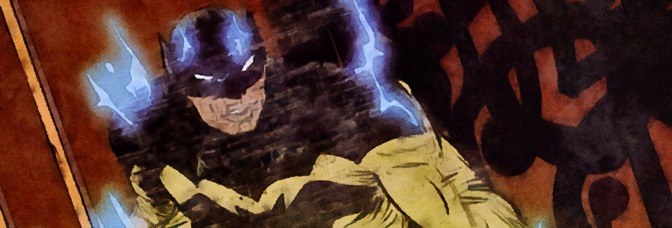
Despite an exceedingly dull finale, a disappointing motorcycle chase sequence, and numerous pointless teasers, this issue ends better than it begins. The first scene is Batman 2039 trying to convince one of his allies he’s not the problem, he’s the solution. There will be a similar sequence at the end for another character, who can’t…
-

Year 100 started with Jim Gordon (named after granddad) not knowing anything about “The Bat-Man of Gotham” and thinking it was an unlikely urban legend in the first issue to revealing he was the warden of Arkham Asylum. And it was filled with super-villains. And then he let the federal police kill them all, getting…
-
About a third of this issue is talking heads. First, it’s unnamed Batman 2039 and his team—including a new Robin, who starts the issue working on a bitchin’ motorcycle for Bats—talking through what led up to last issue’s issue-long chase sequence, and then it’s cop Gordon and his gang looking through the archives for information…
-
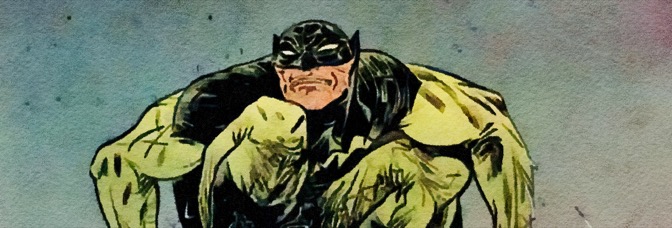
This first issue of Batman: Year 100 is an all-action issue. It’s the future, so people can get around pretty quickly, including federal cops flying around in, I don’t know, hovercraft. Helicopter cabins without rotors or skids. But the future’s also got its low-tech; the first sequence has a pack of police dogs chasing “The…
-

Until this issue, Batman ’89 has been so light on Commissioner Gordon you’d think Pat Hingle’s estate wasn’t letting them use likeness. But he’s got a big part this issue, only for him to come off like a complete asshole. Potentially one who doesn’t like daughter Barbara dating a Black guy but lies to her…
-

I’m verklempt. I wasn’t expecting to be verklempt. But writer Sam Hamm is going for it with Batman ‘89, with artist Joe Quinones going along with all of it—try to make a community march, but in Tim Burton’s Gotham City, you got it—and this issue might be where the elevation is permanent. Hamm’s taken this…
-

Did the Michelle Pfeiffer/Tim Burton Catwoman movie never get made because she refused to wear the new outfit from Batman ’89? Or are the costume designs on the comic just going to be wanting overall. Robin seems inevitable, and I’m concerned. But the banter between Batman and Catwoman—Michael Keaton and Pfeiffer—is kind of exactly what…
-

So it’s not Batman ‘89, it’s Batman ’93? As in, set after Batman Returns… is it just Sam Hamm’s Batman Forever? If so, it’s still okay. I just wasn’t expecting the returning character at the end of the issue. I also wasn’t expecting Hamm to do a deep cut to the original script—and the Craig…
-

I haven’t read any of the previous DC comics sequels to their TV or movie properties—I think it’s just been TV properties, right (“Batman” and “Wonder Woman”)—but I’m certainly sympathetic to the proposition. I did, after all, read the ostensible canon IDW Star Trek: The JJ Abrams Years series for a while. But Batman ’89……
-
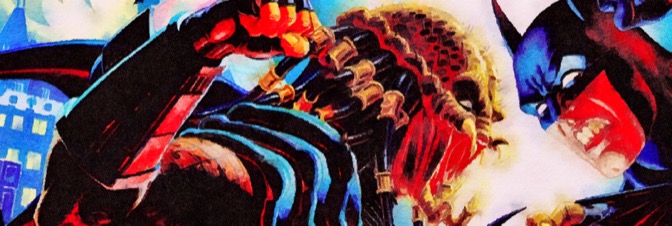
Batman Versus Predator, in case the title doesn’t give it away, is bad. It’s real bad. It could be worse, sure, but it’s real bad. It doesn’t open terribly—sure, the Kubert Brothers art is pretty bland from go, but the subject matter is at least sort of interesting (compared to where it goes later). And…
-

White Knight is fine. Murphy finishes it fine. The art is great, there’s some really cool action–imagine if a Schumacher Batman movie vehicle setpiece were good–and the dialogue’s occasionally really strong. It’s not great. The sequel setup stuff is weak and a copout as far as character work goes. There are other copouts on the…
-

Murphy really likes deus ex machina plot devices. He uses three or five of them in White Knight #7. Given where the series goes, I’m not sure he really needed eight issues–this issue seems like the always intended, not drawn out, penultimate issue. There’s a lot going on, a lot of crowded rooms with exposition,…
 The Stop Button