Category: Comedy
-
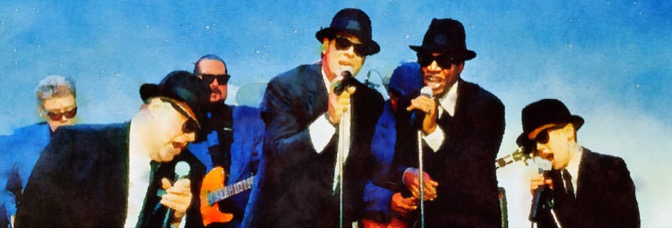
I found something good to say about Blues Brothers 2000. The end credits are seven minutes. The only good thing about this movie is it ending any sooner. 2000 is truly one of the worst movies I’ve ever seen, particularly because it’s not even amusing in its badness. If it was amusingly bad, it would…
-
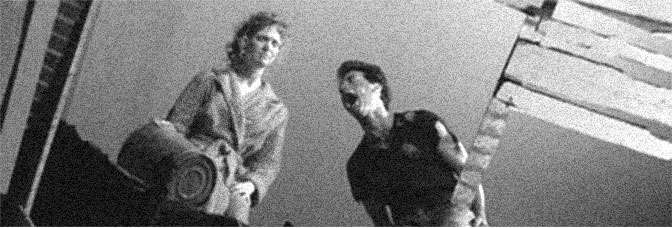
Without any subplots–and a running time, sans end credits, less than ninety minutes–it seems likely The Money Pit had some post-production issues. There are a bunch of recognizable character actors–Josh Mostel, Yakov Smirnoff, Joe Mantegna–who show up for a scene or two then disappear. Still, Money Pit is a great example of a (possibly) problematic…
-
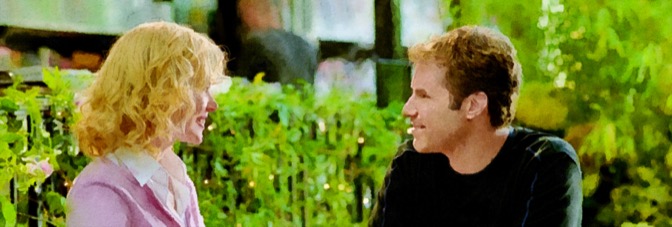
If there’s anything more horrific than Will Ferrell trying to be a straightedge romantic leading man, Bewitched makes one forget about it. Director Ephron is either completely blind to the complete misfire she’s directing or she just didn’t care. Seeing as she and sister Delia Ephron wrote the script, one has to suspect she actually…
-

I don’t even know where to start mocking Please Don’t Eat My Mother. There are just too many places to start… first probably should be the pacing. Mother is a softcore–but seventies softcore, which isn’t particularly soft–remake of The Little Shop of Horrors. Buck Kartalian plays the protagonist, a peeping tom with an overbearing mother…
-

Splash has a strange narrative structure. The front’s heavy, likely because the filmmakers make a real effort to establish Tom Hanks as a listless young (well, youngish) man. Of course, Hanks is a listless man with an apparently great job as a produce whole seller, an amazing Manhattan apartment and limitless funds. Then the end’s…
-
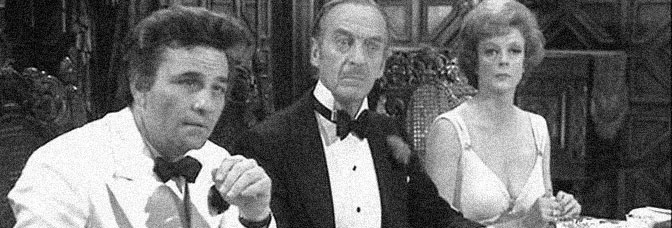
Writer Neil Simon did not adapt Murder by Death from one of his plays, which I’ve always assumed he did. While the film does have a more theatrical structure–a great deal of Death is the cast in one room–the action does follow the characters around and some of their experiences would be impossible without cinematic…
-
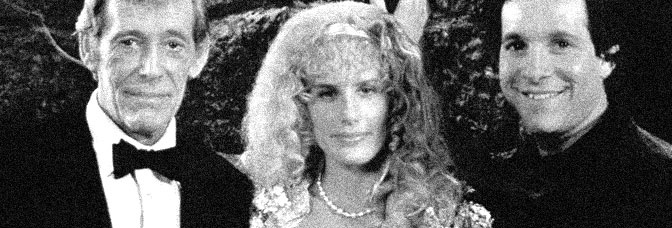
High Spirits is another fine example of how excellent production values, earnest performances and a genial air can make even the most problem riddled film enjoyable. The studio, infamously, took Spirits away from director Jordan in the editing and the resulting version isn’t his intention. The narrative is disjointed–characters get lost, their arcs collapse, in…
-

Crocodile Dundee in Los Angeles is a terrible movie. But it’s not offensive, which makes it peculiar. It’s cringeworthy, with most of its L.A. jokes being about ten years too late. It even has a movie studio finish–an awful sequence–which doesn’t rip-off of Beverly Hills Cop III, but does make one remember what happens when…
-

Besides being extremely funny and rather well-acted, Nine to Five has a lot of narrative problems. The story isn’t a mess exactly, because there’s not enough story for there to be a mess. Higgins and co-writer Patricia Resnick have an idea (Jane Fonda, Dolly Parton and Lily Tomlin are suffering secretaries) and not much else.…
-

It’s somewhat shocking, given Jonah Hill’s presence and David Gordon Green directing, The Sitter is such a mess. Would a remake of Adventures in Babysitting with a listless college dropout in the lead instead of Elisabeth Shue be funny? Maybe. Probably even. Sadly, Sitter doesn’t give Babysitting any source credit (although some of the scenes…
-

When Crocodile Dundee starts, it’s deceptively bold. For roughly the first half of the picture, Linda Kozlowski–without any previous theatrical credits on her filmography–is the protagonist. She’s not really believable as a tenacious newspaper reporter, but she works as Jane to Paul Hogan’s Tarzan. Sorry, Mick Dundee. During that first half, when Dundee is the…
-

Back to the Future gives the impression of being very economical in terms of its narrative… but it really isn’t. Zemeckis just does such a great job immediately establishing the fifties setting, even though there’s less than fifty minutes before the third act, the film feels more immediate. It takes a half hour to get…
-

It’s hard to know where to start with Real Genius. It runs just over a hundred minutes, but gets so much done in the first forty, then so much different stuff done in the next thirty, the remainder is almost entirely separate. The plot evolves, expanding as events unfold. Genius isn’t its concept or MacGuffin.…
-

If the best part of your movie is a Starship song recycled from the nearly unrelated previous entry in the franchise… you’re in trouble. It’s not hard to identify the biggest problem with Mannequin: On the Move, but it feels somewhat bad to single out Kristy Swanson when there’s so much other terrible stuff going…
-

As unlikely as it might seem, The Man Who Knew Too Little could have been really good. Here’s the basic plot–an American rube, who loves movies and television so much he knows the lines, is confused for a dangerous psychopathic hitman involved in international intrigue while vacationing in the UK. All of his hitman lines,…
-

Maverick is a lot of fun. In fact, it’s so much fun, when the film runs into problems in its second act, it’s impossible to be disappointed. It’s still so likable, one just feels bad it doesn’t maintain its quality. There are two major problems. The first is the music. When the film starts–and for…
-

A couple things are immediately interesting about Blades of Glory. First is Will Ferrell. While Ferrell’s top-billed, it’s really Jon Heder’s movie. It isn’t a question of likability–Ferrell, being funnier, is more likable–but of the script’s focus. It’s Heder’s story, with Ferrell along to make things a little more interesting. But Blades isn’t a serious…
-
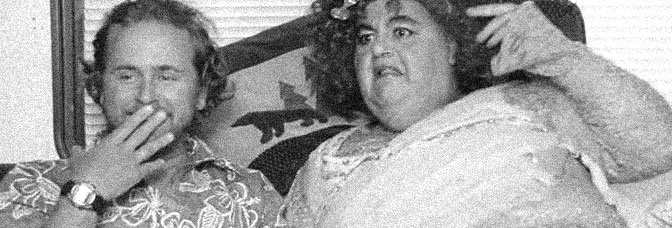
Assisted Fishing opens with two major problems indicative of the film’s overall deficiencies. John Samaha plays a trailer park mom (in addition to another role) and director Crouch opens with her watching a commercial featuring her son, the film’s protagonist. In one of Fishing‘s nicer moves, Crouch infers that information. Derek Haugen plays the protagonist,…
-

I think Slumber Party ’57 is supposed to be a titillating sex comedy but the lame jokes invalidate the latter and the exploitative misogynistic creepiness hopefully nullifies the former. Before getting to the acting, I do want to mention director Levey’s transitions. At times, it’s hard to tell if they’re intentionally strange, but when he…
-
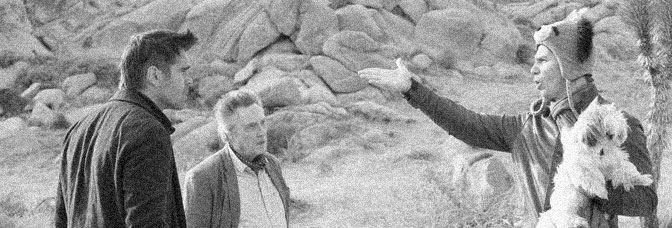
One could say a lot about Seven Psychopaths and how McDonough teases the fourth wall to propel the plot. But such a discussion would distract too much from the film. McDonough gleefully avoids profundity with Psychopaths, though he does occasionally find it. At those moments, he allows the briefest pause before continuing with the relentless,…
-

For an innocuous Touchstone family comedy, Captain Ron isn’t bad. Like most Touchstone movies, it lacks any real personality–Daryn Okada’s photography, for example, should be full of lush Caribbean visuals but it isn’t. Part of the blame goes to director Eberhardt, who doesn’t know how to open up his shots, and Okada’s no help. Ron…
-

Jennifer Garner plays a Sarah Palin-type evil Republican woman in Butter. There’s her character. She does a Sarah Palin in Iowa impression; nothing else. It’s easily the most useless performance in the film, but the film’s otherwise filled with good, rounded performances so it’s even more glaring. And Garner produced the film too so she…
-

Wait, Don’t Tell Mom the Babysitter’s Dead made money? It didn’t make a lot of money, but it probably turned a profit. The movie’s a star vehicle for Christina Applegate, who clearly doesn’t deserve one. Her performance is laughably awful and amateurish; it’s as though the filmmakers realized she wasn’t likable and just went ahead…
-
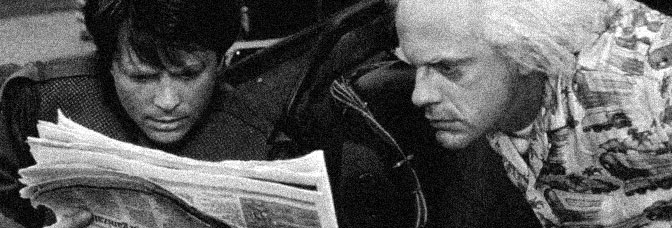
Back to the Future Part II, while front heavy with special effects, ends up being a small picture. The first half or so deals with the sequel setup from the first movie’s finale but then Part II tells a side story set during the first film. Time travel franchises can be, it turns out, rather…
-

Crocodile Dundee II isn’t really a comedy. It’s an action movie with a lot of comic moments, but it’s not a comedy. Figuring out how it’s going to not be a comedy–since it’s a sequel to a successful comedy after all–is one of its biggest problems. Director Cornell and writers Paul Hogan and Brett Hogan…
-

Twister tries very hard to be avant-garde, but ends up just being a quirky family comedy. Worse, director Almereyda changes up the narrative style about fifty minutes into the film. Although Twister is based on a novel, Almereyda’s style is more appropriate for stage. The first half or more takes place on one set–Harry Dean…
-

Silver Streak is a wonderful film. It opens with all these little scenes on a train between Gene Wilder and Ned Beatty and then Jill Clayburgh. At this point, Streak seems like a very intelligent romantic comedy. There’s no drama yet, just excellent dialogue from Colin Higgins’s script. If he didn’t write it for Wilder–who…
-
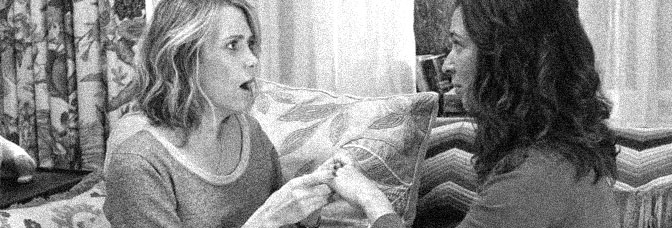
Whatever its faults, Bridesmaids‘s filmmakers get credit for making Maya Rudolph’s parents black and white, instead of ignoring her racial background like many other films would. Sadly, being better in that regard does not make up for Rudolph’s performance being the film’s worst or her character being dreadfully underwritten. Writers Annie Mumolo and Kristen Wiig,…
-

Foul Play ends with a celebration of itself. Over the end credits, clips of some of the film’s more memorable moments and characters play. It’s incredibly egotistical–I mean, Foul Play is director Higgins’s directorial debut, it’s Chevy Chase’s first leading man role… it’s an unproven commodity. Except, of course, Higgins has every right to be…
-

Three Amigos is beautifully made. Whether it’s the silent era Hollywood scenes at the opening, the silent movie in the movie, or the Western the film quickly becomes… it all looks fantastic. Landis even brings in the singing cowboy genre–the scene with the animals accompanying the song is wonderful. The locations desire some credit, but…
 The Stop Button