Paul Levitz (script)
Joe Staton (pencils)
Bob Layton (inks)
Adrienne Roy (colors)
Ben Oda (letters)
Joe Orlando (editor)
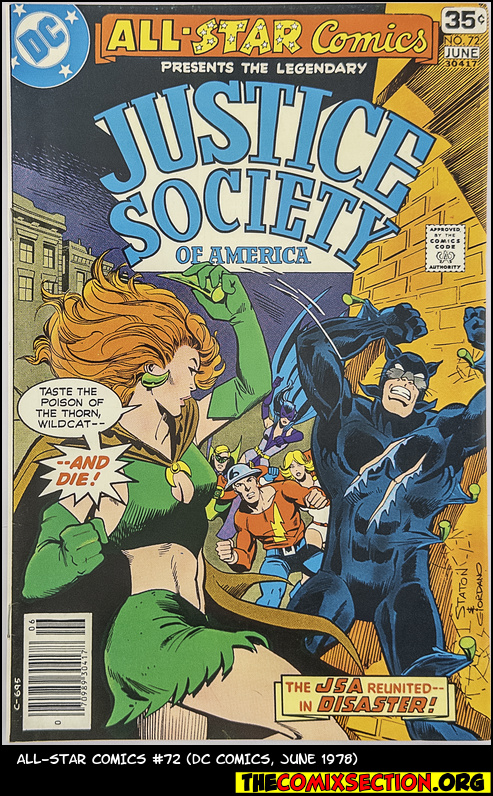
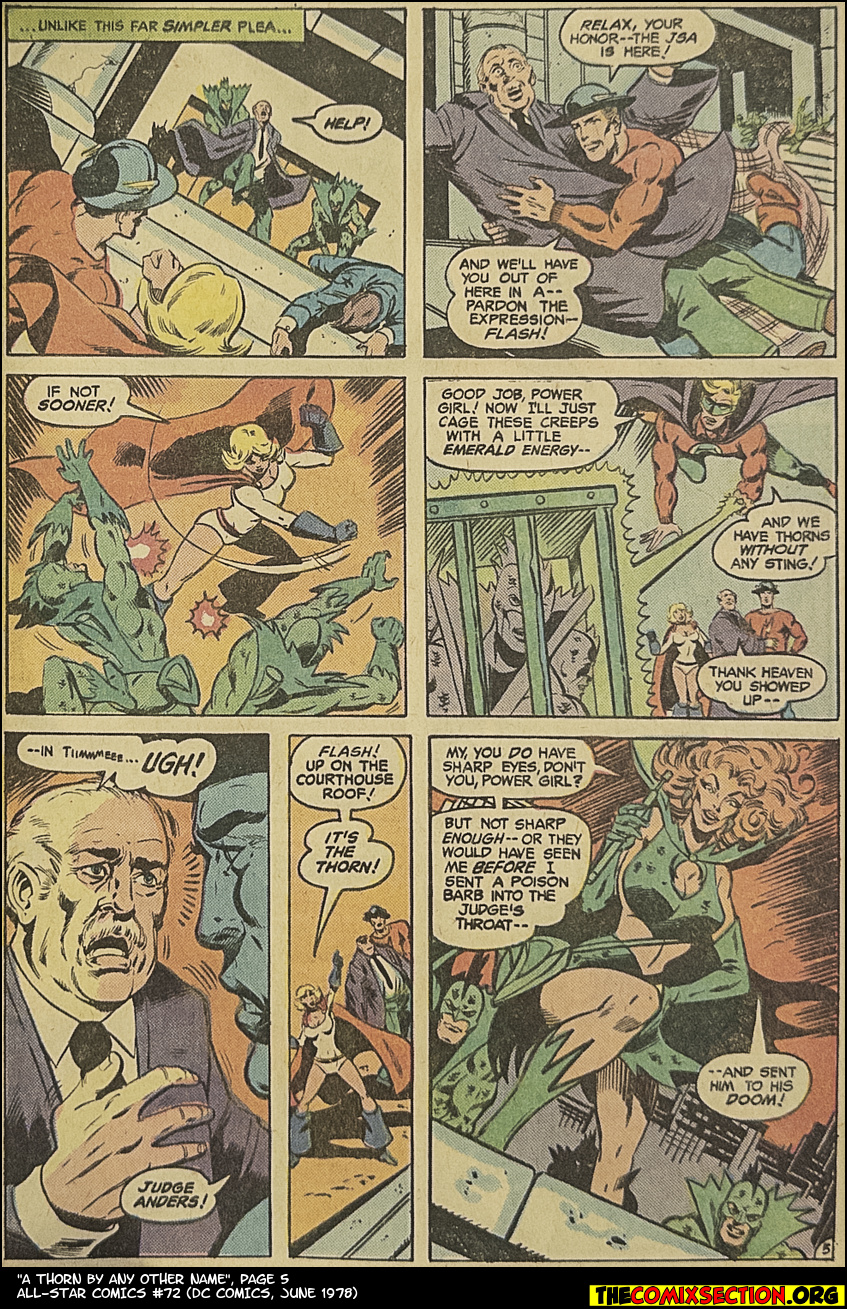
This issue is another strong one for All-Star. Very strong. It gets there a tad cheaply—Golden Age Flash villain Thorn is now aggressively lethal, bumping off Keystone City randos for kicks. She’s also no dummy, knowing the Justice Society’s weaknesses (mostly the normie heroes and Green Lantern’s wood allergy); her wooden poison thorns make short work of the team on the initial confrontation, with the rest of the issue the heroes’ (attempted) response.
We also get one of the team talking about how no Justice Society hero has ever died in action before. Maybe the character in this issue will be the first, which is at least the second time a character’s made that observation in dialogue since Levitz took over, and the third actual team member who’s almost been killed during a mission. It’s strange how little anyone’s invested in this comic book.
But thanks to the downed Justice Society hero of the month, the issue plays a lot better than usual. Huntress is officially a member (Star-Spangled Kid, finally interesting, is out), and Power Girl’s back, so there are two responsible people on the mission. Flash and Green Lantern (no confirmation—either way—of their implied thruple status) are basically useless. They talk about how they wish they’d taken care of their supervillains (it’ll turn out Thorn’s got a secret partner) back in the forties, and someone then reminds them it’s been thirty years and to chill. Then they chill too much and don’t help Power Girl and Huntress fight Thorn’s gang.
The Justice Society is supposed to be the premier superhero team on Earth-Two, but the team’s always mooning and moping. Two of the members—Dr. Fate and Hawkman (who have subplots cooking)—don’t show up for the emergency call. Last issue, no one showed up for it. These are not responsible superheroes, even before we get to Flash screwing up the plan because he forgot Power Girl is a super-girl. Levitz pours the characterization for Huntress and Power Girl (albeit P.G. to a lesser extent), but he’s got no time for Flash and Green Lantern. Outside their occasional lines of dialogue, remembering their old battles with the villains, there’s no character development for them. And, frighteningly, there needs to be some.
Suddenly, Levitz has too much going on in All-Star for its own good, not a problem the book knows much about. The middle-aged heroes versus middle-aged villains could be its own thing; the young heroes having to handhold the middle-aged heroes could be its own thing. Instead, it’s a mishmash. Levitz does make time for “the women are getting things done” vibe. Making his Huntress story arc—which has her emotionally debilitated about her injured comrade—is way too dismissive. She gets lots of page time (and the cliffhanger), but it’s not good material. Especially after we open with her doing her detective thing again, which would’ve come in handy because Flash and G.L. are clearly dopey, but, of course, no.
Still, it’s an okay enough Bronze Age comic. It’s probably Staton and Layton’s best work on the comic to date, with Staton doing more with the visual pacing between panels, and Layton finding something to focus on in them. The constant threat to human life, the ticking clocks, and—credit is due—the tense visuals… It’s all right. A banner All-Star.
Again, big thanks to that particular team member who’s unconsciously almost the entire issue.
 The Stop Button
Leave a Reply