Paul Levitz (1), Gerry Conway (2) (script)
Mike Grell (1), George Tuska (2) (pencils)
Vince Colletta (inks)
Jerry Serpe (colors)
Milt Snapinn (1), Ben Oda (2) (letters)
Al Milgrom (editor)
Joe Orlando (managing editor)
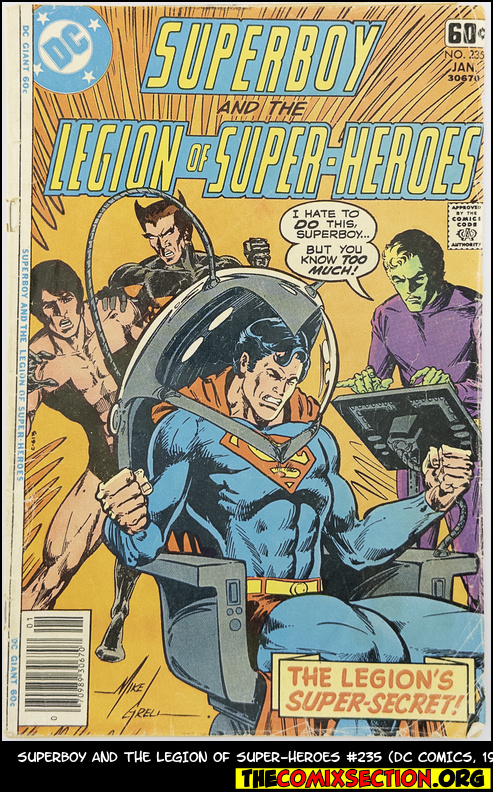
Hang on, it’s Vince Colletta inking both stories? I knew he was on the strange backup from Gerry Conway and George Tuska (Tuska on Legion is fun). But Colletta also inks Grell on the feature. And I think it’s been my favorite Grell art on Superboy… probably ever? So, sometimes, stars align.
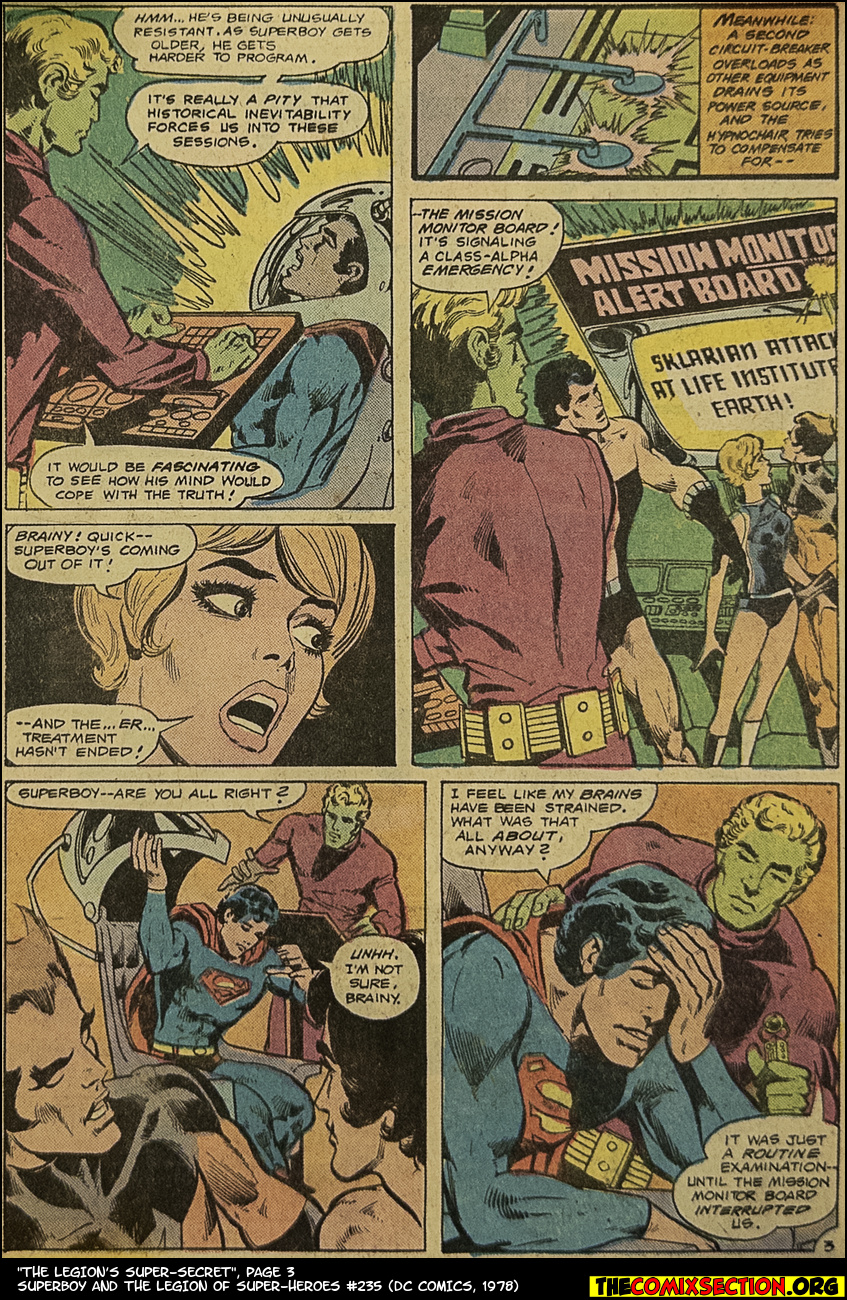
While it’s still not great art, and lots of the costume designs seem to be geared towards silliness over function, Grell takes advantage of the story to really showcase Superboy, which doesn’t happen often. The opportunity arises here because of the plot—the Legion is doing their annual brainwashing of the Boy of Steel when an alert comes in, and because Brainiac 5 doesn’t know how to keep circuits separate, the brainwashing gets interrupted. They have to go save a research station with Superboy, who is susceptible to dangerous future information because of that interruption.
The research station is the most important in the Federation, called “Life Sciences,” and all the scientists are very surprised Superboy has never heard of it. Writer Paul Levitz will pepper the story with Superboy’s suspicions based on (literal) intergalactic eavesdropping and good old twentieth-century critical thinking, but there’s not a mystery here. The reveal isn’t anything the reader could’ve really guessed (other than Superboy’s guess being suspiciously insipid). And the way Levitz writes around the reveal—potentially the most fascinating insight into the (at best) sociopathic Legion of Super-Heroes ever—needs a reread just to parse all the connotations. It retcons almost the entire series, but everyone’s blasé about it.
Despite all the accouterments—and not just the subplot about revolutionaries who want the Federation’s secrets (the ones Superboy also can’t know)—it’s got a very Silver Age vibe, just in terms of character development. Grell’s pencils don’t clash with that vibe, either. Maybe his ability to tell these Silver Age-y stories with Bronze Age futuristics is what Grell brings to Legion.
Contrasting the feature’s Silver Age story in Bronze Age fashion is the backup, which has Conway doing a complicated flashback-based trial story. The Legion’s in trouble for not helping some politician’s son. Both the politician and the Legion needed to get the magic blood of an alien beast; it brings you back from the… You know, I was going to contrast the backup with the Tuska pencils as the more “Bronze Age,” but no, these are both really very Silver Age-y takes. Conway brings a bit more confusion to it, which gives Tuska a lot of fodder, but the core story’s Silvery.
And it’s awesome to see Tuska do the Bronze Age costume designs for some of the Legion. The flashback stuff with the monster isn’t great—not bad, just not great—but the eventual Legion theatrics are a lot of fun, visually.
The issue’s got a big reveal in the feature and the protracted setup in the backup, but neither requires any Legion foreknowledge. Just general awareness. It’s a great onboarding issue, though maybe not the best art the book’s ever had or the best writing, but if readers are into the modern (and retro) takes, this issue’ll let them know Legion’s for them.
 The Stop Button
Leave a Reply