
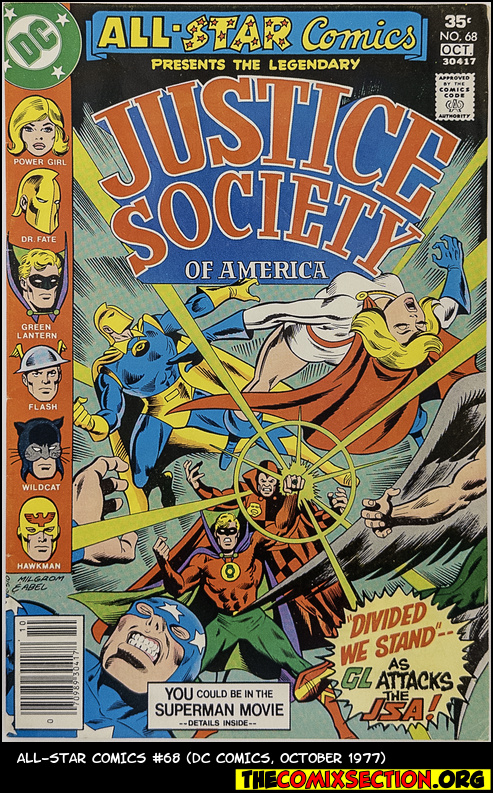
Writer Paul Levitz makes a twelfth-level intelligence move with this issue; it’s not a great script—Wildcat’s “docks” accent is forever obnoxious—and the stakes are haywire, but the reveal is about the only way All-Star could move forward.
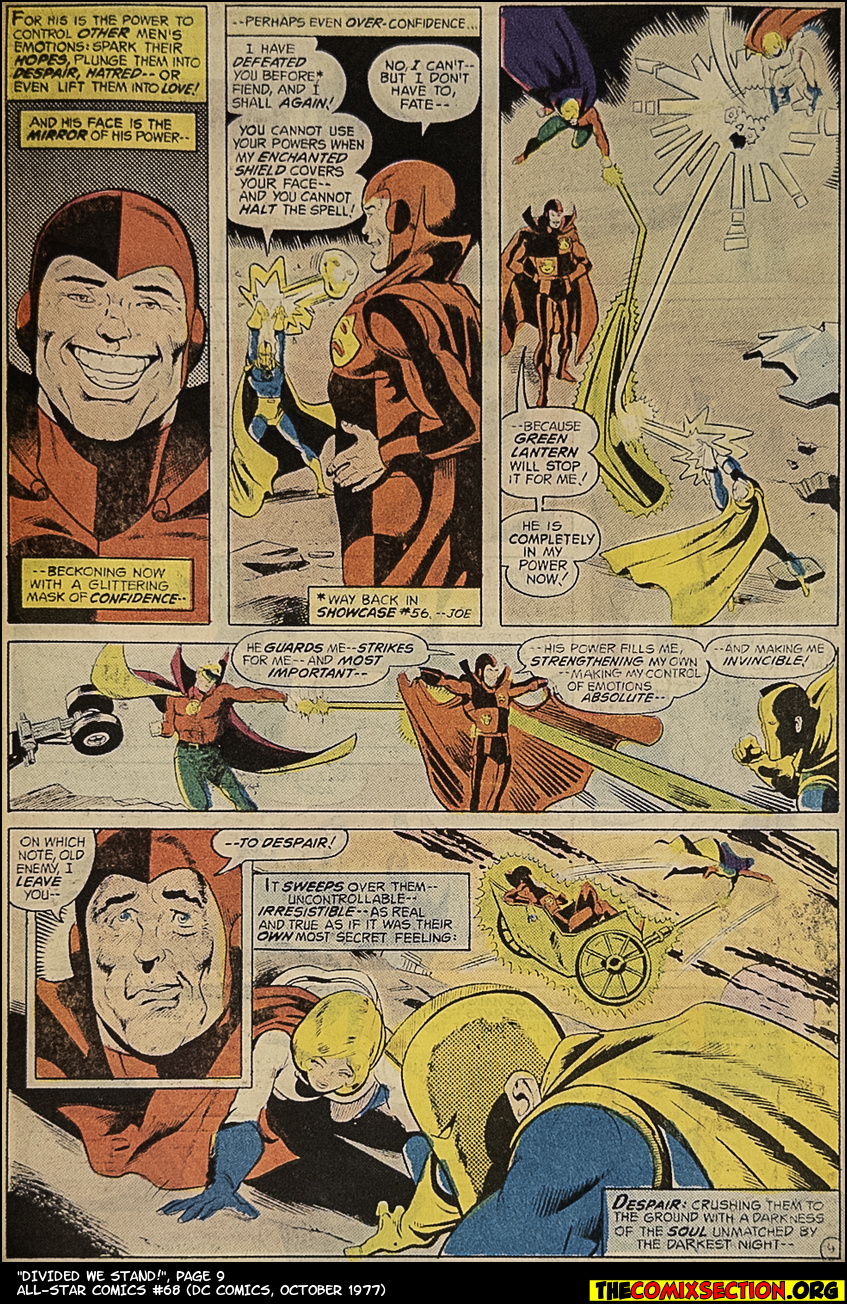
Psycho-Pirate has been micro-dosing the Justice Society with negativity for ages. How long? Long enough to cover all their jerk moves in All-Star, which started in the first issue with the sexism? Don’t ask, just be glad it’s getting resolved. Presumably.
And, at first, it doesn’t seem like they’re resolving anything. The heroes get back home from last issue and start bickering with Dr. Fate, who’s got no time for their malarkey. Power Girl then reminds them they’re supposed to act like teammates, and Flash whinges about it. Luckily, Fate’s got a mission to interrupt them–stopping Green Lantern from destroying the Gotham International Airport.
Lantern’s destroying the airport in an attempt to extort money from the city, which hasn’t done enough to appreciate him as a superhero over the years. The big team fight reveals Psycho-Pirate as the real villain, and he and Green Lantern escape to parts unknown.
After another team member defects to the other side, the good guys figure out where they’re hiding and mount an offensive.
The subplot for the issue is Dick Grayson and Hourman getting back to Gotham City and meeting up with Police Commissioner Bruce Wayne, whose fears about Green Lantern breaking bad now seem founded. Of course, Wayne’s on a righteous crusade, and he may be blinded to the truth (hopefully it won’t turn good men cruel). If he’s even willing to listen. All-Star frequently hinges on this team of superheroes refusing to communicate with one another; maybe it’s just the way Earth Two works.
The way Levitz has gotten the comic working has been fairly simple—if this issue does prove a turning point, anyway–because the whole thing hinges on Dr. Fate, who doesn’t have the most personality. But then no one has personality, except general sexism on the part of the boys, with some dismissiveness of the youth thrown in for good measure. Power Girl and Fate “lead” the team and feature into most of the action—one forgets Star-Spangled Kid is even there—but they’re not the leads of the story. The characters have lost their personal stakes, which allows Levitz to make every issue a good jumping on (or off) point.
Even if the actual content of the comic, good storytelling mechanics aside, is still fifty-something white guys yelling at those damned kids, while always being proven wrong.
Also this issue, throw in penciller Joe Staton committing to showcasing Power Girl’s… ahem… physique more. Except only in action scenes where she’s just taken a hit. Because there’s always got to be something else off; Staton and inker Bob Layton don’t bring much, but they do make one forget Wally Wood was ever on this book.
Still—thanks to Levitz—the book seems poised for a not negative turn. Fingers crossed.
 The Stop Button
Leave a Reply