
Despite producing the film himself, top-billed James Mason doesn’t have the best part in Bigger Than Life. Instead, Barbara Rush–as his suffering wife–gets it. Mason’s a man with a life threatening chronic illness who has to take special medication. Slowly–though not too slowly–that medication starts making him psychotic. Rush is the faithful wife who ignores advice and sticks by Mason’s side, even before she finds out it’s an increasingly known side effect of the medication. After she does make that discovery, it’s basically a rush to the finish with the danger being how far is Mason going to go.
And, actually, he doesn’t go anywhere near as far as one might assume. There’s a bit of restraint, because the movie never wants to make Mason too much the villain. He can be psychologically abusive to son Christopher Olsen, but it takes Olsen a really long time to break down and tell mom Rush how he hates Msaon now. And even after family friend Walter Matthau counsels Rush to call Mason’s doctor–little does she know Mason’s actively deceiving doctor (Robert F. Simon) and has been since his first night home from the hospital. The screenplay–credited to Cyril Hume and Richard Maibaum, but with some uncredited help–gives Rush a range of fantastic scenes as she copes with Mason’s awful behavior, without ever really giving her a great role. She’s just dutiful wife. Of course she’s going to stand by her man, why wouldn’t she?
Though I suppose Mason’s lack of actual dangerous outbursts, just psychological torture of his family, do play a part. Though it’s not like Rush gets to react to them after the fact. She doesn’t get much in the way of character development. No one does. Not even Matthau, who’s third-billed but an overblown cameo by the second half. In the first act, he’s Mason’s best pal–Mason’s a school teacher, Matthau’s the gym teacher–and essential support to the family. Once Mason’s out of the hospital, the film forgets about him until they need an exposition dump. He’s the one who tells Rush about the drug’s side effects, as well as informs on Mason after Mason loses it at a school open house.
The scene where Mason faces repercussions for the behavior at the open house is entirely missing, as principal Rusty Lane–another pal of Mason’s early on–fades away. The more the story focuses in on just Mason, Rush, and Olsen the more unreasonable the plotting becomes. Director Ray is able to get some real tension in the third act, but it’s almost out of nowhere. The family goes to church, which sets Mason off in unexpected ways. Not at church, however, once they’re home, which makes Mason’s earlier public out burst a little nonsensical. His behavior’s predictable to some degree–he’s abusive at home–but only because home is the only place where the action takes place. Presumably he’s still going to work, but there are no further scenes there after a point, which makes the film more and more Rush’s, which is fine. She’s great. But the narrative’s lacking.
Bigger Than Life does only run ninety-five minutes, however, so there’s only so much it can do. Kipp Hamilton, as one of Mason and Matthau’s coworkers (who Rush suspects is having an affair with Mason at one point), completely disappears after Mason’s first day out of the hospital. She’s there long enough to stir up some masculine pride in his wife’s figure (Hamilton is a snazzier dresser than Rush) so Mason decides to bankrupt the family to get Rush a fancy dress. See, the erratic behavior starts right away, when theoretically Mason is taking his prescribed dose… his abuse gets worse as the film goes along, increasing as his mental problems increase, but there’s no direct narrative connection between the two threads. They’re parallel, understood to be causal, but unexplored.
Instead Mason just gets on this kick where he’s going to save the world from the stupid kids of modernity through a return to classical teaching. It’s not explored much more than that description. The script avoids a lot.
But until the third act, the movie basically holds it all together. It’s not until Rush has a last minute monologue explaining herself, which doesn’t actually explain any of her behavior on screen–the dialogue doesn’t jibe with her performance to this point–it seems like no one really knows how to end the movie. Then the movie sets a goal for how it can succeed and… doesn’t. What should be a great acting opportunity for Mason turns into some schmaltz. Not even enthusiastic schmaltz, much lses sincere.
There’s great photography from Joseph MacDonald, good direction from Ray–who has that wide Cinemascope frame but still manages to confine his actors in it, particularly in the tense home scenes, which are the film’s main type of scene–and some fine production values. Ray doesn’t have quite the handle on the school scenes, particularly not as far as tension goes, but they’re pretty sparse once things get going. One of the best sequences, Mason and Olsen playing football and Mason getting progressively more abusive, seems like it’s out of another film entirely, Ray’s style is so different and MacDonald shooting exteriors is such a visual shift.
The film acknowledges quite a bit about toxic masculinity, though nowhere near all the toxic masculinity it ends up visualizing–and Rush’s eventual capitulation to it–which makes things interesting. It’s another of the film’s little disappointments. The hasty finish keeps everyone aware from any self-examination.
Besides the great performances from Rush and Mason, Olsen’s good as the kid, Matthau’s likable in his part, Simon’s good as the doctor. If Ray gave the entire film as much subtlety as the doctors standing around silently regarding Mason, well, it’d be a much different picture. Though, given the way the script works, maybe not a better one. It’s just a bunch of different style choices in a relatively short amount of time. Even the finale is a style choice. Ray’s great at implementing those styles, just not at making them matter.
Bigger Than Life is pretty good, but cast and crew deserve more.
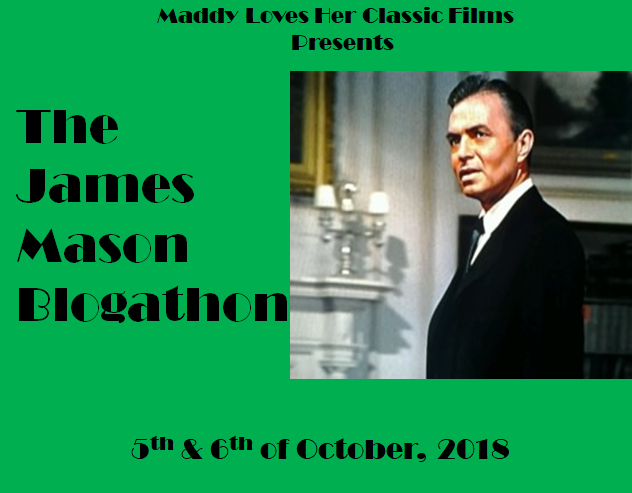
This post is part of the James Mason Blogathon hosted by Maddy of Maddy Loves Her Classic Films.


 The Stop Button
Leave a Reply