Tag Archives: Samuel L. Jackson

White Sands (1992, Roger Donaldson)

It’s not hard to identify the problem with White Sands. Daniel Pyne’s script is terrible. His characters often act without motivation and the double and triple crosses he writes into the plot never have any pay-off. It doesn’t help director Donaldson sees himself–and not incorrectly to a point–doing a desert noir in the vein of Touch of Evil. But Sands is too big for a desert noir and Donaldson doesn’t have any tricks, except good Panavision composition, once the desert element runs out.

There are a lot of good performances in the film–Donaldson casted a lot of fine character actors–but Willem Dafoe is an ineffective lead. A lot of that deficiency is the script’s fault, but Dafoe doesn’t bring any implied depth. It’s a casting misfire (bad guy Mickey Rourke, who’s quite good, would have been a better lead).

Samuel L. Jackson, M. Emmet Walsh, Miguel Sandoval, John P. Ryan and Fred Dalton Thompson all provide texture to the supporting cast. Walsh isn’t doing anything new and Jackson gets off to a rocky start, but they’re fine. The only other misfire is Maura Tierney, who’s absurd.

As Dafoe’s erstwhile romantic interest, Mary Elizabeth Mastrantonio is okay. If the script were better and gave her a real part (she doesn’t even show up until a half hour in), she’d do better.

There’s excellent photography from Peter Menzies Jr. and Patrick O’Hearn’s score often makes Sands seem like a better film.

With a rewrite, it would’ve been.

CREDITS

Directed by Roger Donaldson; written by Daniel Pyne; director of photography, Peter Menzies Jr.; edited by Nicholas Beauman; music by Patrick O’Hearn; production designer, John Graysmark; produced by Scott Rudin and William Sackheim; released by Warner Bros.

Starring Willem Dafoe (Ray Dolezal), Mary Elizabeth Mastrantonio (Lane Bodine), Mickey Rourke (Gorman Lennox), Samuel L. Jackson (Greg Meeker), Miguel Sandoval (FBI Agent Ruiz), M. Emmet Walsh (Bert Gibson), James Rebhorn (FBI Agent Flynn), John Lafayette (FBI Agent Demott), Maura Tierney (Noreen), Alexander Nicksay (Ben Dolezal), John P. Ryan (Arms Dealer), Fred Dalton Thompson (Arms Dealer) and Mimi Rogers (Molly Dolezal).


Related posts:

About these ads

The Avengers (2012, Joss Whedon)

For some inexplicable reason, partway through The Avengers, director Whedon and his cinematographer, Seamus McGarvey, decide to switch over to really bad DV. The entire movie might be DV, but the middle section is painfully obvious. With Tom Hiddleston’s British machinations, it feels like the biggest, strangest (and possibly worst) “Masterpiece Theatre” ever.

While Whedon’s responsible for a lot of the film’s problems–the lousy first act, the utter absence of character development, some of the least ambitious direction in motion picture history–some of the problems came with the project. Sam Jackson isn’t just ludicrous, he’s bad. Scarlett Johansson as a Russian? And a super spy? It’s absurd.

But Whedon doesn’t give his better actors much to do either. Both Chris Evans and Robert Downey Jr. meander for the first half, though Evans is a little better (Downey recovers in the second half). Mark Ruffalo does better. Chris Hemsworth barely makes an impression; his appearance feels contractually obligated more than anyone else’s.

The movie does come together eventually though and Whedon does come up with some really funny scenes. He starts the movie incompetently small and then brings in the spectacle. The spectacle works, regardless of his direction, it’s just too bad The Avengers isn’t a cohesive work.

Hiddleston’s pretty good as the only non-CG villain and Clark Gregg does great supporting work. Jeremy Renner’s minuscule presence is inconsequential; Cobie Smulders is terrible.

Alan Silvestri’s score is dreadful.

But, as I said, The Avengers spectacle does entertain. Eventually.

CREDITS

Directed by Joss Whedon; screenplay by Whedon, based on a story by Zak Penn and Whedon and comic books by Stan Lee and Jack Kirby; director of photography, Seamus McGarvey; edited by Jeffrey Ford and Lisa Lassek; music by Alan Silvestri; production designer, James Chinlund; produced by Kevin Feige; released by Walt Disney Studios.

Starring Robert Downey Jr. (Tony Stark / Iron Man), Chris Evans (Steve Rogers / Captain America), Chris Hemsworth (Thor), Mark Ruffalo (Bruce Banner / The Hulk), Scarlett Johansson (Natasha Romanoff / Black Widow), Jeremy Renner (Clint Barton / Hawkeye), Tom Hiddleston (Loki), Clark Gregg (Agent Phil Coulson), Cobie Smulders (Agent Maria Hill), Stellan Skarsgård (Selvig), Samuel L. Jackson (Nick Fury) and Gwyneth Paltrow (Pepper Potts).


Related posts:

The Other Guys (2010, Adam McKay), the unrated version

The Other Guys ends with an animation explaining the financial bailout in terms of what it means to the average American (i.e. the viewer). It tangentially relates to the movie’s plot. It might be the “best” use of a mainstream film’s end credits ever. Someone will soon ruin it I’m sure.

Otherwise, The Other Guys is an amiable comedy. Will Ferrell is funny doing his regular thing, only this time in a new setting–though the New York cop movie setting is traditional, so they get to play with the genre a little. Mark Wahlberg is fantastic here, with a self-depreciating performance. Sure, he’s just doing his Departed role (there’s another great Departed reference here too) but it’s still funny. Similarly, Michael Keaton–in his first “big” live action movie in many years–is great. He’s doing a Keaton comedy performance, but it’s excellent. Steve Coogan’s good….

The surprise is Eva Mendes, who’s quite good. She’s really gotten better lately (she has one great scene where she can’t quite contain her laughter opposite Ferrell).

McKay’s direction mimics action movies, so he doesn’t have to do much special with it. It’s a wholly competent production; McKay’s greatest strength as a filmmaker isn’t his composition, which is fine. I mean, the choice of Ice-T as the film’s narrator would be the best thing about it if there weren’t so many other excellent choices.

The Other Guys is a self-aware, intelligently produced diversion.

I can’t believe it made any money.

CREDITS

Directed by Adam McKay; written by McKay and Chris Henchy; director of photography, Oliver Wood; edited by Brent White; music by Jon Brion; production designer, Clayton Hartley; produced by Patrick Crowley, McKay, Will Ferrell and Jimmy Miller; released by Columbia Pictures.

Starring Will Ferrell (Detective Allen Gamble), Mark Wahlberg (Detective Terry Hoitz), Eva Mendes (Dr. Sheila Ramos Gamble), Dwayne Johnson (Detective Christopher Danson), Samuel L. Jackson (Detective PK Highsmith), Michael Keaton (Captain Gene Mauch), Steve Coogan (Sir David Ershon), Ray Stevenson (Roger Wesley), Rob Riggle (Detective Evan Martin), Damon Wayans Jr. (Detective Fosse), Michael Delaney (Bob Littleford), Zach Woods (Douglas), Lindsay Sloane (Francine), Rob Huebel (Officer Watts), Natalie Zea (Christinith) and Anne Heche (Pamela Boardman). Narrated by Ice-T.


Related posts:

Jurassic Park (1993, Steven Spielberg)

Two big things I noticed about Jurassic Park. First, it’s still a superior use of CG. It really shows how digital effects do not get better with technology or budget or whatever; being used by a good filmmaker makes all the difference.

And Spielberg does a fine job with Jurassic Park. It’s an incredibly impersonal film, which the second thing I noticed really showcases. Sam Neill’s protagonist is so shallow, even Bob Peck’s character—who gets no back story—comes off deeper. Some of the problem is with Neill’s performance. He can’t keep his American accent—in fact, at the beginning it seems like he’s supposed to be Australian, but then he starts suppressing it, only to then let it come through. Laura Dern’s character is even more shallow, but she manages to make the character work with her performance. Neill gets better towards the end, when he finally stops whining about not liking kids.

Once the film gets going, it has a fantastic pace. Spielberg’s direction is strongest here in that regard—he knows how to make the film work and does; he also knows how to get good performances out of almost all the cast. Neill isn’t really his fault.

Besides Peck, Jeff Goldblum, Martin Ferrero and Samuel L. Jackson are standouts. Richard Attenborough teeters between endearing and good. He sells his most important scene.

The John Williams score is excellent, the Dean Cundey photography is good (but not singular).

Jurassic Park’s a fine, pseudo-smart popcorn movie.

CREDITS

Directed by Steven Spielberg; screenplay by Michael Crichton and David Koepp, based on the novel by Crichton; director of photography, Dean Cundey; edited by Michael Kahn; music by John Williams; production designer, Rick Carter; produced by Kathleen Kennedy and Gerald R. Molen; released by Universal Pictures.

Starring Sam Neill (Dr. Alan Grant), Laura Dern (Dr. Ellie Sattler), Jeff Goldblum (Dr. Ian Malcolm), Richard Attenborough (John Hammond), Bob Peck (Robert Muldoon), Martin Ferrero (Donald Gennaro), Joseph Mazzello (Tim Murphy), Ariana Richards (Lex Murphy), Samuel L. Jackson (Ray Arnold), B.D. Wong (Henry Wu) and Wayne Knight (Dennis Nedry).


Related posts:

Jurassic Park series:

Amos & Andrew (1993, E. Max Frye)

The problem with Amos & Andrew is the execution. Frye has a good concept—a black professional moves to an island community filled with guilty white liberals and suffers thanks to their community interest, finding he has more in common with a two bit criminal than his neighbors. And the stuff between Samuel L. Jackson and Nicolas Cage is occasionally quite good. Cage’s performance reminds why him no longer doing comedies is a loss. Jackson isn’t awful (his character is a stereotype—Frye never gives him anywhere near the depth of, say, Lionel Jefferson–but no telling if Jackson could handle it if he had).

Frye sets it up as a comedy of errors. Islanders Michael Lerner and Margaret Colin mistake Jackson for a thief (because he’s black). It gets worse when the dumb, racist white cops arrive (there’s an oxymoron). Oddly, the villain—Dabney Coleman’s politicking chief of police—is one of the few white characters who isn’t racist. He’s just an ass. And Frye gets points for not shying away from the bigotry. Lerner and Colin never get redeemed, even after he makes them primary supporting cast members.

Maybe with a different director—Frye has no sense of scale—it could have worked out. He shoots a major media event in a shoebox.

Lerner and Coleman are caricatures, but Colin’s got some good moments, as does I.M. Hobson. Giancarlo Esposito, Loretta Devine and Bob Balaban all do well in thankless roles.

Amos & Andrew is almost worth watching for Cage.

CREDITS

Written and directed by E. Max Frye; director of photography, Walt Lloyd; edited by Jane Kurson; music by Richard Gibbs; production designer, Patricia Norris; produced by Gary Goetzman; released by Columbia Pictures.

Starring Samuel L. Jackson (Andrew Sterling), Nicolas Cage (Amos Odell), Dabney Coleman (Chief of Police Cecil Tolliver), Michael Lerner (Phil Gillman), Margaret Colin (Judy Gillman), Brad Dourif (Officer Donnie Donaldson), Chelcie Ross (Deputy Earl), I.M. Hobson (Waldo Lake), Jeff Blumenkrantz (Ernie the Cameraman), Giancarlo Esposito (Reverend Fenton Brunch), Loretta Devine (Ula), Bob Balaban (Fink), Aimee Graham (Stacy) and Tracey Walter (Bloodhound Bob).


Related posts:

Trees Lounge (1996, Steve Buscemi)

I suppose it would be possible for Trees Lounge to be more depressing. It’s a character study; the epical part of the narrative forces the protagonist (writer, director, star Buscemi) to realize he does not just dislike himself, he’s never really liked himself, and he’s not just hurting people now, he’s always been hurting people.

Maybe the most stunning thing about the film–besides Buscemi’s direction of actors–is how he inserts humor into the mix. There’s a running gag with a kid never getting ice cream and when Buscemi falls asleep drunk at a wake, it’s played humorously. The first part is more “cleanly” funny (it also foreshadows how people in general do not think about how events effect others–something very important in the narrative towards the end), while the second is awkward. The film’s full of desperate alcoholics and occasionally Buscemi makes them funny, giving the viewer little warning.

Buscemi juxtaposes his character’s arc against Mark Boone Junior’s. The difference is in the self-realization (Trees Lounge might even have a happy ending, there’s about a fifteen percent chance).

He spends the first forty-five minutes of the film exploring the ground situation, then introduces one event to stir up the pot. It’s a lovely plot structure, made perfect by the excellent dialogue.

Amazing supporting performances abound–Boone is great, as is (especially) Chloë Sevigny. Daniel Baldwin and Mimi Rogers have superb small parts. Samuel L. Jackson is outstanding in a cameo.

It’s a fantastic, depressing film.

CREDITS

Written and directed by Steve Buscemi; director of photography, Lisa Rinzler; edited by Kate Williams; music by Evan Lurie; production designer, Steve Rosenzweig; produced by Chris Hanley and Brad Wyman; released by Orion Classics.

Starring Steve Buscemi (Tommy), Mark Boone Junior (Mike), Chloë Sevigny (Debbie), Anthony LaPaglia (Rob), Elizabeth Bracco (Theresa), Michael Buscemi (Raymond), Eszter Balint (Marie), Daniel Baldwin (Jerry), Mimi Rogers (Patty), Carol Kane (Connie), Debi Mazar (Crystal), Kevin Corrigan (Matthew), Samuel L. Jackson (Wendell) and Seymour Cassel (Uncle Al).


Related posts:

Iron Man 2 (2010, Jon Favreau)

Even with its problems, Iron Man 2 is leagues better than the original.

There’s some awkward plotting to catch the viewer up with the characters and it all makes for a wonderfully boring superhero movie.

That open’s a showcase for Downey’s acting abilities, given he’s on a slow burn as everything around him explodes–for the first half, there’s not much Iron Man, but lots of villain stuff with Mickey Rourke and Sam Rockwell, plus the introduction of Scarlett Johansson and “return” of Don Cheadle.

And when it does finally catch fire–even with the more ludicrous plot elements–it’s fantastic. It’s a shame it ends when it does, since it introduces so much great material for the actors to work with.

As far as actors… Downey’s great, Rourke’s great… Rockwell’s a little toned down–he’s been a lot more dynamic in other stuff–and, finally, someone realized Downey and Gwyneth Paltrow do a great Nick and Nora together and let them.

Unfortunately, there are other actors. Cheadle’s okay. It’s never believable he and Downey are friends though (it wasn’t in the first one with Terrence Howard, so no biggie). Johansson’s infinitely bland, which is better than her normal awful (regardless of her acting, her fight scene has some great choreography). Samuel L. Jackson is a joke, one the filmmakers don’t seem to be in on.

It’s a lot of fun and it’s got some actual content, which really surprised me.

It’s a shame about John Debney’s laughable score though.

CREDITS

Directed by Jon Favreau; screenplay by Justin Theroux, based on the Marvel Comics character created by Stan Lee, Larry Lieber, Don Heck and Jack Kirby; director of photography, Matthew Libatique; edited by Richard Pearson and Dan Lebental; music by John Debney; production designer, J. Michael Riva; produced by Kevin Feige; released by Paramount Pictures.

Starring Robert Downey Jr. (Tony Stark), Gwyneth Paltrow (Pepper Potts), Mickey Rourke (Ivan Vanko), Don Cheadle (Rhodey), Scarlett Johansson (Natalie), Sam Rockwell (Justin Hammer), Samuel L. Jackson (Nick Fury), Clark Gregg (Agent Coulson), Garry Shandling (Senator Stern), Jon Favreau (Happy) and John Slattery (Howard Stark).


Related posts:

Iron Man series:

The Spirit (2008, Frank Miller)

The Spirit is a disaster. It’s a complete disaster. But sometimes, it’s a wonderful one.

Frank Miller can’t write a movie, he can’t plot a movie–arguably, with the exception of his straight-on shots, he can sort of direct one–but it doesn’t matter. There’s no good reason anyone should have given Miller any kind of budget or creative control over a movie and Lionsgate, being Lionsgate, did and he created this mess.

There are good things about The Spirit. Actors. Two of them. Gabriel Macht and Sarah Paulson. Some of the very supporting supporting cast is all right. The majority of the performances are awful. They’re incompetent, but Miller can’t direct actors and he can’t cast them. He found two of the worst female actors he could and cast them in a movie together–who’s worse, Eva Mendes or Scarlett Johansson. I actually think it has to be Johansson, just because her scenes with Samuel L. Jackson make it look like he’s giving a decent performance (by comparison).

Miller apparently thought Jackson was a good choice for the outlandish villain, but Jackson gives the same performance–big shock–he’s been giving since Pulp Fiction. He does not, however, mention being black, which might be the reason he’s a little bit better than usual. With Johansson around–or Paz Vega or Stana Kelic–it’s impossible for Jackson to really seem all too terrible. There’s so much garbage acting, just the basic ability to deliver ones lines puts Jackson leagues ahead.

Dan Lauria is also terrible. Miller’s choices, however stupid, all make sense except Lauria. He should have chemistry with Paulson. He doesn’t. He should have chemistry with Macht. He doesn’t. Instead, he goes around being awful.

Miller’s style for the film occasionally betrays real storytelling sensibility. Not often, but occasionally; enough to keep the interest level up. But the thrill of The Saint is feeling Miller’s vibe–his idiotic vibe. I think he thinks he did a good job presenting Will Eisner’s character to modern audiences, but what he’s created is this amalgam fans won’t like and new audiences can’t connect with. By updating the original, he’s somehow dated it.

He did the whole green screen thing (like Sin City) and it frequently works. Letting Miller be stupid is at least interesting, whether it’s his composition or the way he utilizes color.

It’s too bad it’s not a particularly original film. It seems like a retread of Batman Forever, but with the Danny Elfman Batman music blaring. There are Pulp Fiction references, Superman references… all sorts of references. And they don’t work because Miller doesn’t understand he isn’t connecting with the audience. He probably even thought the audience was going to care about the characters.

Only Macht and Paulson make real people. Paulson because she can’t help acting well and Macht by accident (his frequent voice overs do him no favors). But their scenes together are fantastic, right from the start.

I suppose the movie moves pretty well too. It’s going to be one of the last vanity projects unproven filmmakers get, so it’s definitely worth looking at just from the historical perspective. Plus, it’s nowhere near as bad as I expected.

CREDITS

Directed by Frank Miller; screenplay by Miller, based on the comic book series by Will Eisner; director of photography, Bill Pope; edited by Gregory Nussbaum; music by David Newman; produced by Deborah Del Prete, Gigi Pritzker and Michael E. Uslan; released by Lionsgate.

Starring Gabriel Macht (The Spirit), Eva Mendes (Sand Saref), Sarah Paulson (Ellen), Dan Lauria (Dolan), Paz Vega (Plaster of Paris), Eric Balfour (Mahmoud), Jaime King (Lorelei), Scarlett Johansson (Silken Floss), Samuel L. Jackson (The Octopus) and Louis Lombardi (Phobos).


Related posts:

Star Wars: Episode III – Revenge of the Sith (2005, George Lucas)

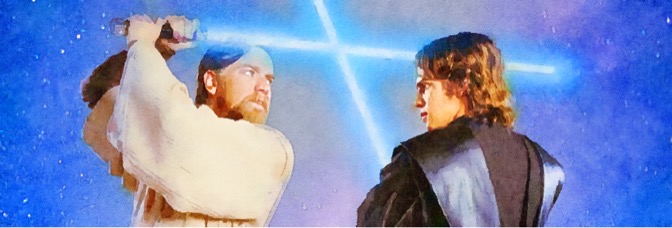
This movie got good reviews, right? I mean, I know Episode I got good reviews, but this one did too, right? I suppose the CG is better than before–except for Yoda, who’s desperate for a good puppeteer–and the action sequences are a tad more engaging. The space battles, mostly. The actual lightsaber fight scenes are terrible. Lucas never establishes what makes a good… lightsaber-er. I mean, does one have to be a strong Jedi to do it or can a mediocre Jedi simply be good at it? The lightsaber fights aren’t much fun because it’s impossible to tell if the person winning is overcoming the odds or not.

But besides the improved CG, there’s absolutely nothing to recommend the movie. Even Ewan McGregor, who technically isn’t bad, doesn’t have any actual good scenes. Oh, I forgot about the backdrops–the composite backdrops, when Lucas sticks the actors in front of green screens and CG backdrops–are awful. They look worse than a matte painting in a Roger Corman movie.

Back to the acting–hopefully I’ll get around to script at some point, but it might be hard to muster the enthusiasm–Star Wars: Episode III – Revenge of the Sith is a constant battle between Hayden Christensen and Natalie Portman for worst performance in a galaxy far, far away (and this one). While Christensen is abjectly terrible, Portman’s somehow even worse–it’s a shocking statement, but true. Maybe it’s because Christensen’s in a lot of the movie, so the viewer gets worn down. Portman’s only in a handful of scenes–which doesn’t make much sense in terms of Lucas’s “sweeping” narrative–and she’s like a infrequent, deep stab into the chest.

The supporting cast is no better. Ian McDiarmid’s awful, Samuel L. Jackson’s apparently turning in a comic performance. No one–not even George Lucas–could think Jackson was giving a good performance. Actually, I think Jimmy Smits might give one of the film’s better performances.

Too bad, I got to the script. It starts immediately, with a poorly written (and laugh-out loud funny) opening text crawl. Then there’s the coughing robot–not to mention all the other robots, besides R2-D2, speaking English. Why doesn’t R2 just speak English too? Lucas turns R2 into an action hero–only for a while, though a Gizmo arc from Gremlins 2 would have been amusing–and those scenes aren’t terrible. It’s at least cute. There’s a stupid Chewbacca cameo. Every cameo and reference is stupid, depending on the viewer’s regard for the old Star Wars movies, they’re even offensive. It’s like Lucas never watched the original trilogy (yes, even Jedi).

There’s more–much more–like how it seems like Lucas never auditioned Christensen with McGregor, since they have absolutely no chemistry. There’s Portman calling Christensen by the nickname he had in the first movie–you know, when he was a little kid. It’s as creepy as the Luke and Leia kiss (in hindsight). I don’t even want to talk about the Luke and Leia introduction–it’s one of the worst scenes I’ve ever seen. It’s got to be.

Revenge of the Sith is a piece of crap. It’s so unfunny, there’s not even a point in musing on what happened to Lucas. There’s a character named Darth Plagueis (yes, I did have to Google the spelling). You know, as in Darth Plague-is. A grown-up wrote that name down and thought it was good.

CREDITS

Written and directed by George Lucas; director of photography, David Tattersall; edited by Roger Barton and Ben Burtt; music by John Williams; production designer, Gavin Bocquet; released by 20th Century Fox.

Starring Ewan McGregor (Obi-Wan Kenobi), Natalie Portman (Padmé), Hayden Christensen (Anakin Skywalker), Ian McDiarmid (Supreme Chancellor Palpatine), Samuel L. Jackson (Mace Windu), Jimmy Smits (Senator Bail Organa), Frank Oz (Yoda), Anthony Daniels (C-3PO), Christopher Lee (Count Dooku) and Keisha Castle-Hughes (Her Royal Highness, The Elected Queen of Naboo).


Related posts:

Star Wars series:

Resurrecting the Champ (2007, Rod Lurie)

The biggest problem with Resurrecting the Champ, besides Rod Lurie, is the Champ himself. Not Sam Jackson, who’s actually the least irritating he’s been since Loaded Weapon or so, but the character and his function in the film. At some point during the late second act, Champ is a decent movie about a guy growing up, realizing he’s got to take responsibility for his actions and realizing it isn’t going to be easy. If anyone can screw up an easy story like that one, it’s Rob Lurie, who demphasizes the finally (after the first ninety minutes) interesting relationship between estranged married couple Josh Hartnett and Kathryn Morris, who have a ludicrous backstory detailed in expository dialogue, but actually develop a rather tender relationship–albeit one centered around disappointment–by the last twenty minutes of the film. It’s a previously uninteresting aspect of the film made interesting, much like Hartnett’s actual journalistic pursuits. The scenes between him and Jackson, with the ominous something in their futures, are mostly okay. Boring, but okay. Jackson is doing an impression of an Oscar-hungry role here, shuffling around, not yelling, maybe not even swearing. The problem with his performance has little to do with the actual performance… he’s not believable as a former boxer. Especially not when there’s that constant, Lurie-friendly use of flashback. Lurie is the most overly melodramatic, goofily sentimental director working today–The Contender, The Last Castle, and now Resurrecting the Champ. He’s insincere, so much so, any viewer can tell.

None of these problems phase Hartnett, however, who turns in an excellent lead performance. Hartnett always shone in ensembles or as the sidekick, but Champ gives him a whole lot to do. The script’s obvious and mediocre, but Harnett’s acting is not. It might help Lurie managed to fill the cast with good actors (except Teri Hatcher, who under-stays her welcome by three seconds… any more and it’d have been intolerable). Except the film never works with it. Alan Alda is good as Hartnett’s boss and there’s some great stuff between them, but it’s hardly in there. Alda being the only one, besides Morris, who can tell Hartnett’s without content. By the end, filled with the lame friendship with Jackson and some convenient inner turmoil over his relationship with his father, Hartnett finally gets some really good scenes, those family scenes. Even if the kid playing he and Morris’s son is bland enough to be in a Mentos commercial.

As a visual director, Lurie actually isn’t terrible. There are some well-composed shots, maybe even thirty percent of them. Still, the film looks too crisp, like poorly lighted DV (did I mention Hatcher was terrible already?), and it’s real impersonal. The characters spend more time outside than they do in; the most effective scene at Hartnett and Morris’s house is in the backyard, when the age difference gets to play well into the story, instead of being vanity casting.

Lurie wrecks the film’s third act. The film’s actually in decent shape and he and the screenwriters go after it with a baseball bat. A lame voiceover (big shock from Lurie) almost undoes Harnett’s performance, but it can’t. It’s a great performance; it’s a shame it’s in such a lame film.

Oh, and the Peter Coyote scenes (Coyote’s in a ton of makeup) are great.

CREDITS

Directed by Rod Lurie; screenplay by Michael Bortman and Allison Burnett, from an article by J.R. Moehringer; director of photography, Adam Kane; edited by Sarah Boyd; music by Larry Groupe; production designer, Ken Rempel; produced by Brad Fischer, Marc Frydman, Mike Medavoy, Arnold Messer and Bob Yari; released by Yari Film Group.

Starring Josh Hartnett (Erik), Samuel L. Jackson (Champ), Kathryn Morris (Joyce), Alan Alda (Metz), David Paymer (Whitley), Rachel Nichols (Polly), Dakota Goyo (Teddy), Teri Hatcher (Flak), Ryan McDonald (Kenny), Harry J. Lennix (Satterfield Jr.) and Peter Coyote (Epstein).


Related posts: