Tag: Edward Van Sloan
-

If it weren’t for the “fallen woman” third act, Deluge would probably stay afloat at the end. Instead, it flops out in the really protracted finale, which involves a survivor camp deciding on a credit system in an effort to get capitalism back. It’s a real let down considering the second act is all about…
-
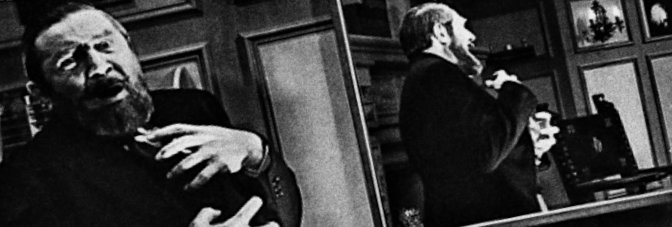
For the first few chapters, Bela Lugosi can carry The Phantom Creeps. He’s hamming it up as a mad scientist surrounded by actors who can’t even ham. Creeps has some truly terrible performances, particularly from its other leads, Robert Kent and Dorothy Arnold. He’s the military intelligence officer out to discover what’s happened to Lugosi’s…
-

Sadly, there’s not much world destroying in To Destroy the World. Not even when Bela Lugosi, finally reunited with his meteorite and able to escape, decides instead he’s going to steal a biplane and bomb things. Starting with the federal building. Only he drops a bomb on a zeppelin, which does indeed crash and burn,…
-

The Blast features some of Phantom Creeps’s most prevalent tropes. Good guys following bad guys because they happened to drive and pass one another. Jack C. Smith’s henchman (to Bela Lugosi’s mad scientist) getting shot and dazed. Smith’s been shot at least three times (and dazed) in the serial. Sometimes even with multiple shots. Guns…
-

The title, Phantom Footprints, could almost refer to when a spy–seeing invisible Bela Lugosi’s shadow–thinks there might be something there. But then another spy just tells the first spy to shut up about it. It happens twice, first with Anthony Averill saying it’s stupid, then (after Averill starts talking about it) with Edward Van Sloan…
-
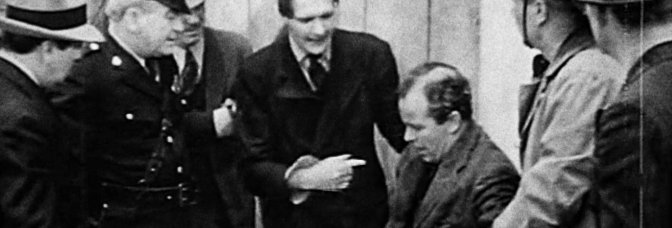
Speeding Doom once again has the good guys, bad guys, and Bela Lugosi trying to get Lugosi’s box. In the box is a powerful meteorite, which allows for all of Lugosi’s inventions. But the good guys and bad guys don’t know about it yet. They still aren’t sure Lugosi’s alive. Until the bad guys chase…
-

Trapped in the Flames is yet another exciting installment of The Phantom Creeps. Yet again, the Feds (led by Robert Kent) pursue the foreign agents (Anthony Averill’s the chief henchman, Edward Van Sloan’s the boss) trying to find Bela Lugosi’s missing box. No one but Lugosi (presumed dead by both parties) knows what’s in the…
-

The Menacing Mist is endless. It starts with Bela Lugosi trying to kill Robert Kent with his remote control robot, but then he has to deal with some insurrection from lackey Jack C. Smith. Kent’s just doing action, so at least he’s not doing bad acting. Smith, on the other hand, is doing some bad…
-

Phantom Creeps hits the halfway point with some intrigue involving one of the cast possibly being a double agent (fingers crossed as it’d give the plot something engaging) and Bela Lugosi getting a new weapon, a kind of ray gun. The ray gun doesn’t get much usage after the demonstration because Lugosi sics his robot…
-

Thundering Rails is mostly vehicular action. It starts with Robert Kent and Dorothy Arnold trying to land a damaged plane while dropping hand grenades on the foreign spies (being careful not to hurt good guys Regis Toomey and Edwin Stanley). Then there’s a bunch of car chases. The cliffhanger–which isn’t a cliffhanger at all–involves a…
-

I suppose Invisible Terror, which doesn’t feature much invisible terror, is an improvement over the previous chapter. Terror does have Edward Van Sloan in a full flight suit waving a gun around threateningly. Not many opportunities to see such a thing. The story continues to be Feds versus gangsters with Bela Lugosi (still thought dead)…
-
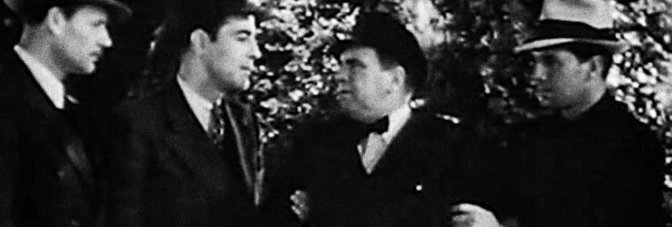
If Crashing Towers is any indication, the only thing keep The Phantom Creeps creeping along is top-billed Bela Lugosi. He’s not in the chapter much–more often than not he’s invisible–and, wow, are things rough without him. In addition to the predictable bad acting from Robert Kent and Dorothy Arnold, Edwin Stanley–who’s not new to the…
-

Despite a stupefying cliffhanger resolution–disasters happen, people just don’t get hurt–Death Stalks the Highways turns out not too bad. Comparatively. Take Bela Lugosi for instance. He tries real hard with some of his acting. It’s not good, but he’s trying. The trying gets him ahead of Robert Kent, who’s not good but also not trying.…
-

The Menacing Power does all right setting up the hook of The Phantom Creeps–Bela Lugosi is a mad scientist with various technological inventions he’s going to use for nefarious purposes–and even manages to gracefully segue between the expository setup and the chapter’s cliffhanger. So far Lugosi’s made an invisibility wearable, an eight-foot plus tall robot,…
-

Dracula’s Daughter starts as a comedy. With Billy Bevan’s bumbling police constable, there’s nothing else to call it. Sure, the opening deals with the immediate aftermath of the original Dracula–returning Edward Van Sloan arrested for driving a stake through a man’s heart–but it’s all for smiles, if not laughs. Bevan’s terrified expressions carry the movie…
-

The Mummy is a strange horror movie. While there’s a definite villain–a monster–in Boris Karloff’s resurrected mummy, he poses a danger specifically to only one cast member–Zita Johann. She’s the reincarnation of his lost love and her exact importance to him isn’t clear until the last act. There’s a somewhat goofy moment where Edward Van…
-
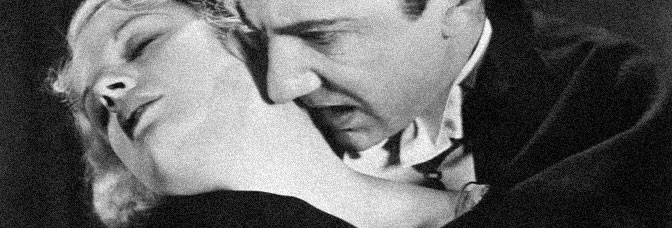
Even though it still falls apart at the end, this truncated, eight millimeter version of Dracula is better than the regular version. It’s exactly what I was hoping for from these Castle Films digests. All of the long dialogue scenes are gone. There’s no explanation of vampires, the entire sequence before London is gone, no…
-

I’m trying to imagine how Frankenstein looks on the big screen–maybe on one the size of Radio City Music Hall; James Whale fills the screen upward. He directs the viewer’s attention always up, starting with the first scenes in the tower laboratory. The frames are obviously filled with extensive detail, which video certainly does not…
-

I never got Dracula. Even as a kid, I never watched it over and over, like I did the other Universal monster movies. When I went back and saw it in the late 1990s–after Ed Wood–Bela Lugosi’s performance horrified me. He makes funny faces and does Charles Atlas exercises for scary body language and woodenly…
 The Stop Button