Tag: Boris Karloff
-
The Terror is not camp, which is bewildering, not just because it’d be better if it were camp, but because, based on its vitals, it seems like it can’t not be camp. The film stars Jack Nicholson as a Napoleonic officer—he does not attempt an accent, thank goodness—who gets involved with some supernatural goings-on involving…
-

Mad Monster Party? spends a solid portion of its runtime only slightly amusing. It’s technically competent stop-motion animation with a charming voice performance from Boris Karloff as Boris von Frankenstein. He’s just discovered the anti-life formula and has become destroyer of ravens, potentially worlds. Having run the gamut from creating life to creating anti-life, Karloff…
-
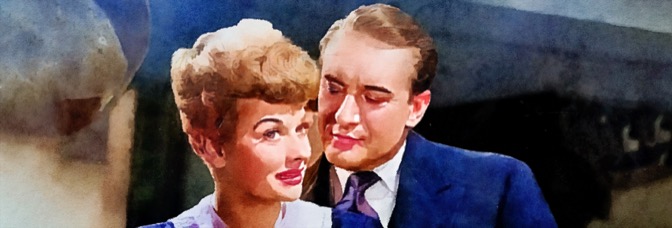
If Lured had gone just a little bit differently, it could’ve kicked off a franchise for Lucille Ball and George Sanders. He’s the high society snob, she’s the New York girl in London, they solve mysteries. But Lured isn’t their detective story; it’s Charles Coburn’s detective story, they’re just the guest stars. Coburn’s a Scotland…
-
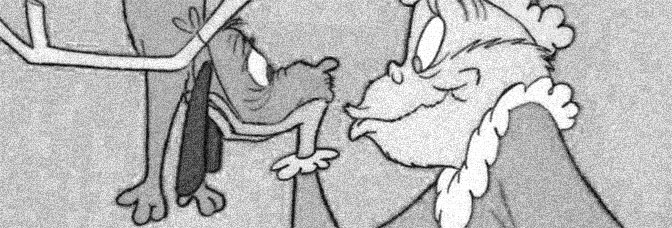
How the Grinch Stole Christmas! has three rather distinct things going on throughout the twenty-six minute television special. It also some some indistinct things going on–the Whoville songs, while charming, are nowhere near as impressive as the big things. First, but not foremost, is Washam and Jones’s direction. Although Grinch is a Dr. Seuss adaptation,…
-

The Black Cat has a lot going on. It’s the story of two American honeymooners–David Manners and Julie Bishop–who, for whatever reason, decide Hungary is better than Niagara Falls. It’s also the story of a recently freed Hungarian soldier Bela Lugosi, who went into the war a happily married psychiatrist, only to lose his family…
-
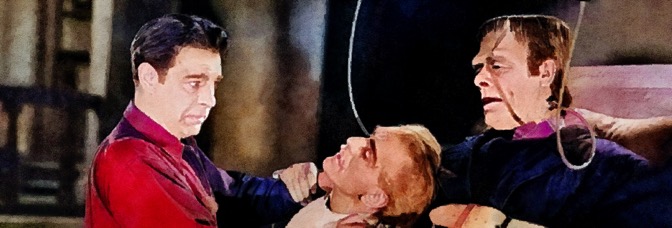
Just over half of House of Frankenstein is glorious. Kenton’s direction is outstanding, the sets are imaginative, the actors are doing great. Beautiful photography from George Robinson. House is a scary movie, what with physically but downright evil Boris Karloff running the proceedings. What doesn’t work–like John Carradine’s “just okay” Dracula–gets smoothed out by unexpected…
-

Son of Frankenstein is a mostly wasted opportunity. For everything good, there’s something significantly wrong with it. The script is good, director Lee doesn’t direct actors well. The German Expressionist-influenced sets are great, Lee shoots it so stagy, the sets go to waste. Lee likes his long shots. He and editor Ted J. Kent do…
-

The Mummy is a strange horror movie. While there’s a definite villain–a monster–in Boris Karloff’s resurrected mummy, he poses a danger specifically to only one cast member–Zita Johann. She’s the reincarnation of his lost love and her exact importance to him isn’t clear until the last act. There’s a somewhat goofy moment where Edward Van…
-

For The Bride of Frankenstein, director Whale takes a contradictory approach. It's either more is more, or less is less. More music, all the time. Franz Waxman's frequently playful music rarely fits its scenes, unless Whale is going for a melodramatic farce, which he really doesn't seem to be doing. I kept hoping he would…
-

The Old Dark House is a strange film about strange people doing strange things. Director Whale and screenwriter Benn W. Levy rarely let the film get a set tone–unless one counts the consistent mix of comedy and horror. It’s not straight comedy; the comic elements tend to be either absurdly strange or pedestrian. Husband and…
-

Bedlam is about a third of a good picture. It’s like writers Val Lewton and (director too) Robson didn’t quite know how to make it work, what with having to have Boris Karloff in it. Karloff’s the villain, the head of a mental institute in the eighteenth century. Karloff’s so evil–and surrounded by so many…
-
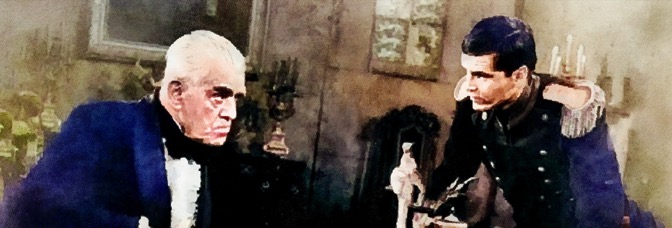
It might be too easy just to call The Terror terrible or to go into the various puns one could make with “terrible” and the title. It’s not a surprisingly bad film at all. It’s an expectedly bad film, given it opens with a pointless scare attempt. Boris Karloff shows up in the first scene-walking…
-
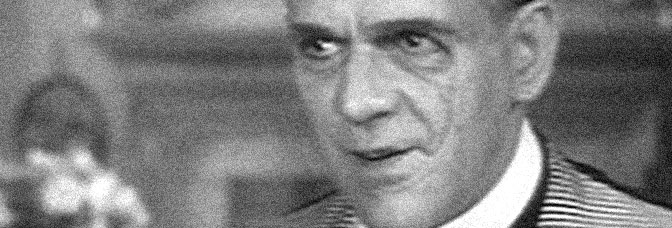
It should be obvious British Intelligence is based on a play, so much of it takes place in a single house, but director Morse and screenwriter Lee Katz open it up enough it never does. Actually, even though it’s a low budget picture, their expansive approach even obscures the concentration around the one setting. Intelligence…
-
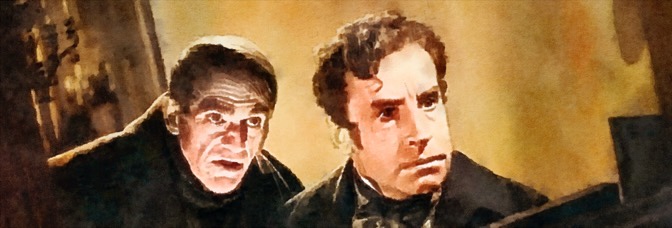
The Body Snatcher has half an excellent foundation. Nineteenth century medical genius Henry Daniell can’t escape his past associations with a shady cabman (Boris Karloff). These past associations being of the grave robbing variety. There’s also Daniell’s romance with his maid (Edith Atwater), which humanizes the character throughout the first half, since Daniell’s supposed to…
-
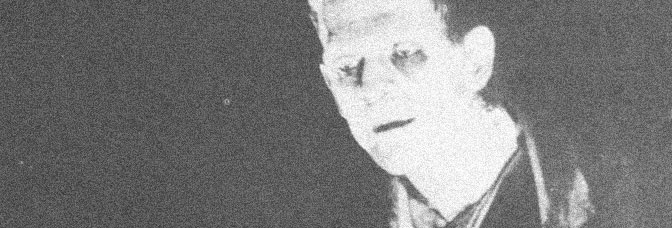
The eight millimeter digest version of Frankenstein removes all but three main characters. Colin Clive gets the most time, though loses all subplots and character, with Boris Karloff probably coming in second. It’s odd to watch Frankenstein and have the monster make so little impression but it’s clearly possible. Dwight Frye, for a while, makes…
-

The Greek anti-defamation league, if it existed, mustn’t have had much power when Isle of the Dead came out. It’s a quarantine drama, a genre I’m unfamiliar with but certainly has a lot of potential, set on a small Greek island. There’s nothing on the island besides an amateur Swiss archeologist (Jason Robards Sr.) and…
-
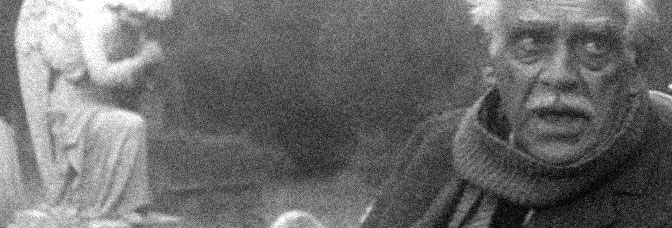
For the first three quarters of Die, Monster, Die!, the biggest mystery in the film is how wheelchair-bound Boris Karloff gets around so well. The lifts become visible in the last act. Karloff’s British upper crust whose family name has fallen on hard times thanks to an embarrassing father. Satanic ritual embarrassing, not hounding the…
-
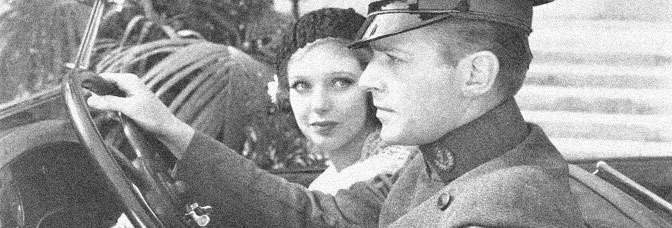
While I Like Your Nerve is urbanely genial, it’s a somewhat high concept romantic adventure comedy. Douglas Fairbanks Jr. is a playboy–though not one of means–living it up in South America. He travels from country to country (they are, of course, so small he can drive) and stirs up trouble. But then he sees Loretta…
-
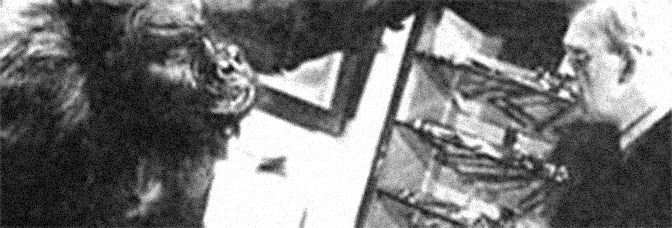
I always forget awful films have always been made; I usually establish some arbitrary point in the mid-fifties when they started getting unwatchable. Then something like The Ape comes along and reminds me I need to set that point earlier. The film’s based on a play, which must be a hoot considering how many different…
-

I’m trying to imagine how Frankenstein looks on the big screen–maybe on one the size of Radio City Music Hall; James Whale fills the screen upward. He directs the viewer’s attention always up, starting with the first scenes in the tower laboratory. The frames are obviously filled with extensive detail, which video certainly does not…
 The Stop Button